How does a nation under constant aerial assault stop a jet-powered kamikaze drone? Ukraine has just provided one answer. In a conflict defined by relentless adaptation, Ukrainian forces have achieved a first-of-its-kind interception, using a domestically developed Sting interceptor UAV to destroy Russia’s Geran‑3-the local designation for the Iranian Shahed‑238. More than a tactical success, this incident represents a milestone in drone‑on‑drone warfare and a case study in how rapid innovation can meet evolving threats.
The engagement, confirmed by the Serhii Sternenko charitable foundation, took place in the context of an overnight Russian attack involving dozens of jetpowered Shaheds. Success against such a fast and low-signature target speaks to Ukraine’s growing ability to integrate agile, low-cost systems into its layered air-defense network. For defense analysts, the particulars of this interception-and the broader context of Ukraine’s counter-UAV evolution-offer critical lessons for modern warfare.
1. The Geran‑3/Shahed‑238 Threat Profile
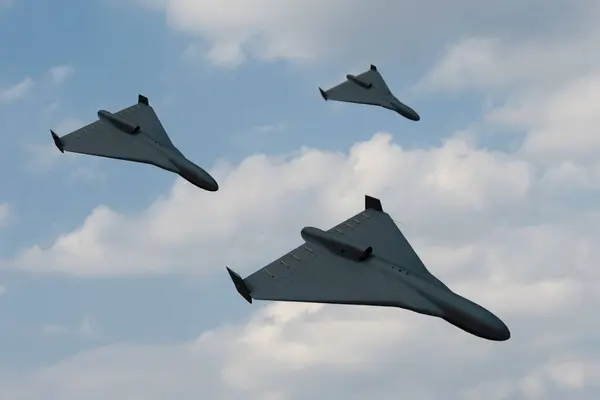
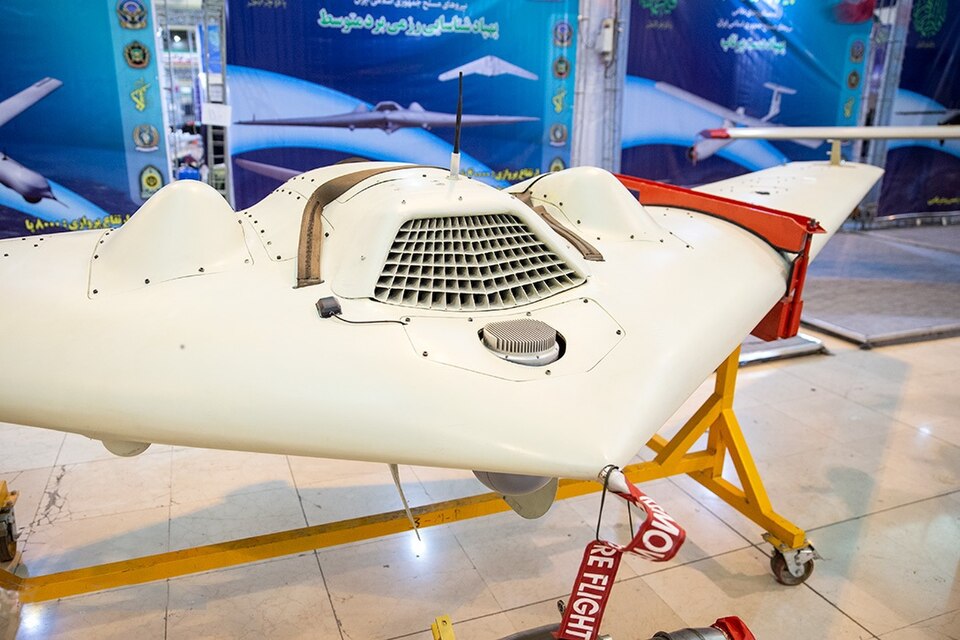
The Geran‑3, a jet‑powered one‑way attack drone inspired by the Iranian Shahed‑238, features a flying speed of 550–600 km/h and a maximum range of up to 2,500 km. It is 3.5 m long, with a warhead weighing 50 kg, making it more difficult to detect and intercept than earlier propeller‑driven Shaheds. Ukrainian intelligence reports actual cruising speeds closer to 300–350 km/h, with the maximum velocity reached only in the final stages of an attack a weakness exploited by interceptors such as the Sting.

2. Sting Interceptor UAV Design and Performance
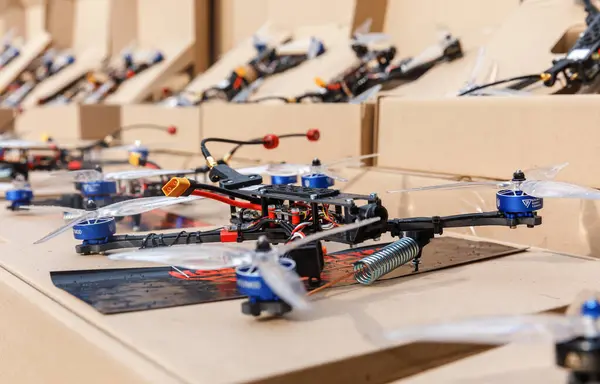
Developed by Ukraine’s Wild Hornets engineering group, the Sting follows a quadcopter layout with a dome‑mounted camera and forward warhead for direct‑impact kills. The operators use VR goggles for first‑person guidance. Capable of more than 315 km/h and up to 3,000 m, the platform operates within a radius of 25 km. Its low cost, at around US$2,500‑$10,000, makes it an economically efficient countermeasure to the expensive surface‑to‑air missiles.
3. Operational Integration into Air Defense
The Sting forms part of Ukraine’s hybrid air‑defense architecture, filling gaps where conventional SAM systems are overextended or reserved for higher‑altitude threats. Its agility and affordability allow deployment in contested airspace, yet effectiveness wholly depends on integration with detection assets, unified command‑and‑control, and timely target designation. Without these, even high‑performance interceptors risk under‑utilization.
4. Combat Debut Against Jet‑powered Shaheds
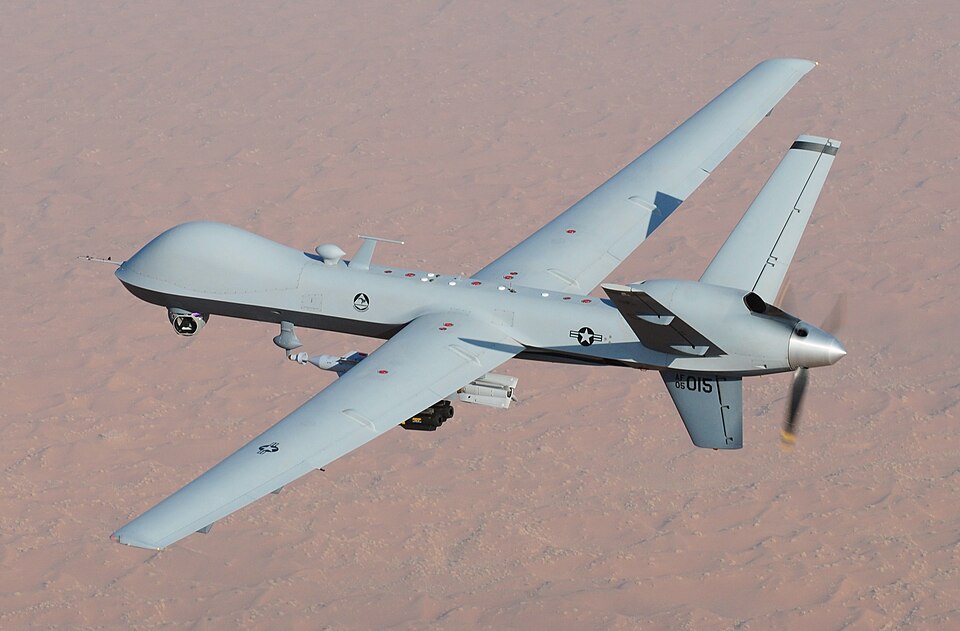
During the night of 29–30 November, Ukraine shot down several Geran‑3s with interceptors launched from Sting systems. According to reports, it was the first documented case in which a Ukrainian UAV destroyed a jet‑powered Shahed. In this incident, 138 Geran‑3s were launched in a broader raid, most of which were confronted by multiple layers of defense. The success of the Sting underlines the potential of drone-on-drone engagements against high-speed targets.

5. Economic and Tactical Advantages
The interceptor drones provide a cost‑per‑kill well beneath that of missiles and help rectify the economic imbalance when defending against massed UAV raids. Compared to the ~$50,000 for a Shahed, the cost of a Sting is a tiny fraction, making deployments scalable. Tactically, they can be launched in less than one minute, pursue targets in complex flight paths, and operate in areas where gun‑based mobile teams face altitude or visibility limitations.
6. Technical Limitations and EW Vulnerability
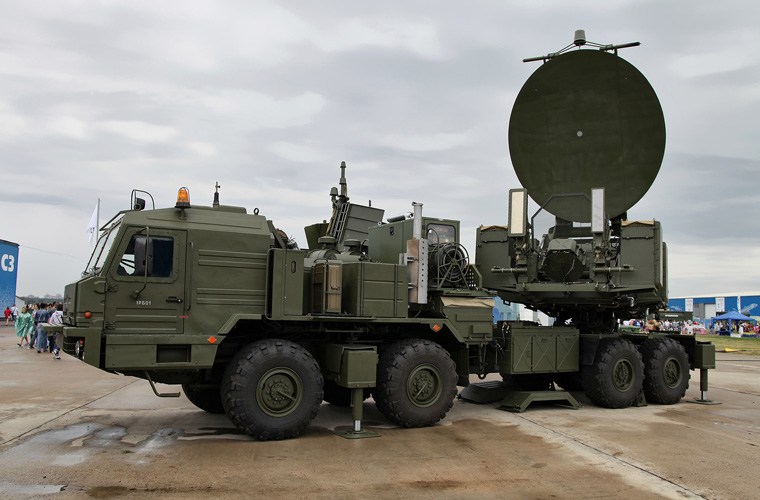
However, despite its strengths, the Sting uses FPV radio links that are prone to jamming and loss of signal. Limited onboard energy constrains endurance relatively small warhead mass reduces effectiveness against hardened or large UAVs. Weather conditions, night operations, and operator skill further affect the possibility of success in interception.
7. AI and Guidance System Upgrades
Ukrainian designers are fitting the interceptors with AI‑based target acquisition and machine vision modules, such as the VGI‑9, to enhance lock‑on accuracy and autonomy. Systems of this nature can maintain course after target lock, are resistant to electronic warfare, and achieve precision within 0.5 m. About 10% of all new interceptors currently already carry such automation, while future designs are foreseen to provide swarm coordination under single‑operator control.

8. Industrial‑Scale Production and Distributed R&D
Today, Ukraine’s drone industry produces over four million UAVs each year, enabled by the power of a distributed network of private companies, volunteer workshops, and government initiatives. Such a model allows for fast iteration combat feedback can drive design changes in just days and resilience in light of wartime supply chain pressures. Scaling interceptor production will be vital to maintaining counter‑UAV capability.
9. Strategic Implications for Modern Warfare
The combat debut of the Sting points to a trend towards flexible, scalable defenses against massed air threats. As drone-on-drone engagements become standard, militaries will have to revise doctrine, training, and procurement to incorporate such systems. The model Ukraine has followed for rapid innovation in operational need provides a template for low-cost, high-volume threats in conflicts to come.
Bringing down the jet-powered Shahed-238 with the Sting UAV is more than a tactical gain for Ukraine it heralds the arrival of a full-fledged counter-UAV capability based on speed, affordability, and adaptability. The implication, from a defense-planning viewpoint, couldn’t be clearer: in the age of massed drone warfighting, only those who can innovate quickly, integrate smoothly, and scale up their production to meet emerging threats will thrive.


