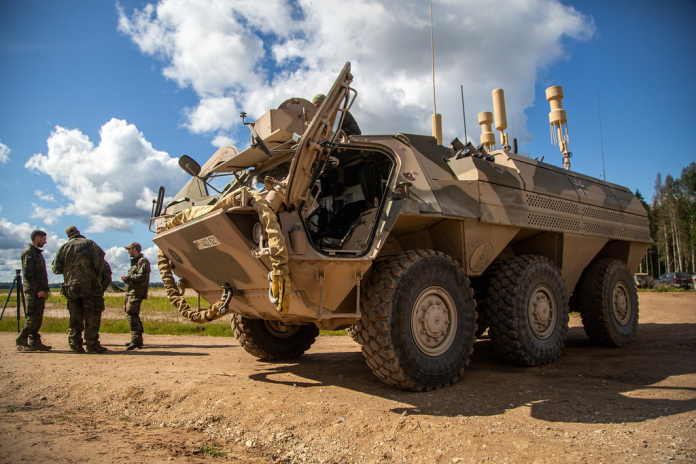
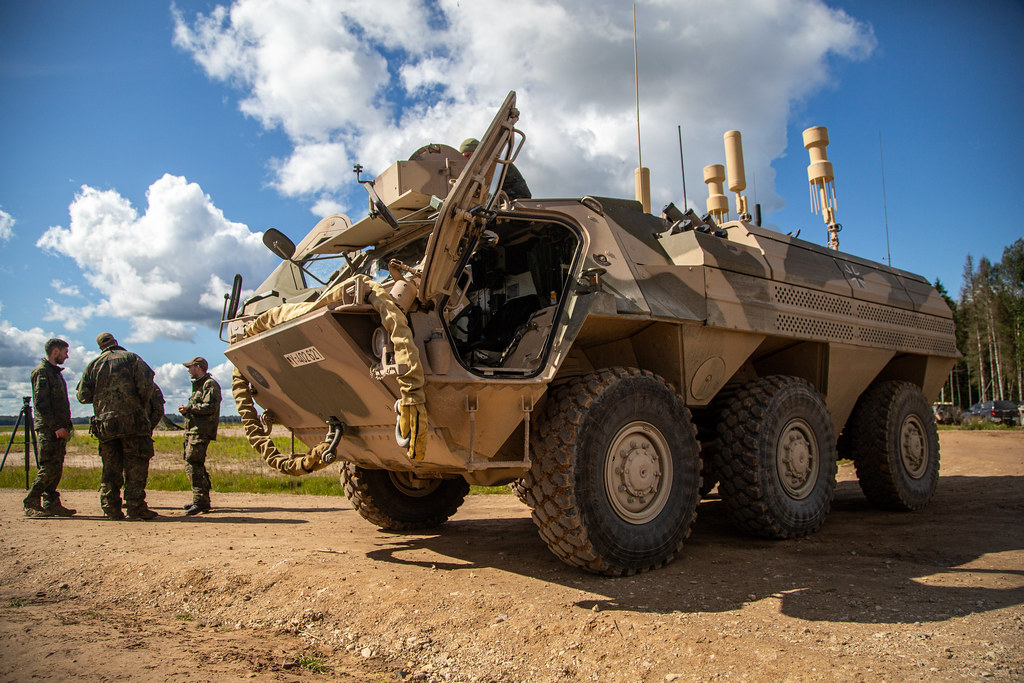
“Drone warfare is no longer the future: it is the present on the battlefield and it is evolving at a rate that outpaces many acquisition programs.” In Eastern Europe, “the Eastern Flank of NATO has emerged as an innovation hub for counter-UAS, reflecting experience gained in Ukraine’s high-end drone conflict.” “The US Army Project FlyTrap 4.5 assessment in Germany did not constitute business as usual. It represented an intentional, high-risk integration of experimental systems into operational networks in a hostile electromagnetic environment.”
Air defenders, acquisition authorities, and select industry innovators at Truppenübungsplatz Putlos in what has been roughly two weeks of testing have been evaluating the readiness of technologies for detection, discrimination, and defeat in live drone swarms in maritime and open terrains. This is essentially practice for those in the Baltic and mixes well-developed tactical scenarios with NATO member efforts to create an integrated air defense network. It holds vital lessons on adaptational readiness for the US and its allies in the face of ever-changing aerial threats.

1. Integration into NATO’s Command-&-Control Backbone
“One of the defining successes of FlyTrap 4.5 was the integration of all participating systems and networks into the brigade FADC2 network seamlessly. FADC2 is the backbone of the Eastern Flank Deterrence Line and enables integrated defenses from the Baltic to the Black Sea in terms of layered defenses that are commanded and controlled.” Dealing with live networking in a hostile electromagnetic spectrum, such an operation represented an important milestone in this effort, facilitated by V Corps and 2nd Cavalry Regiment, and described as “not only an experiment, but a dress rehearsal for ultimate operation” in comments made by Brig. Gen. Curtis King.
2. Passive vs. Active Sensor Trade-offs
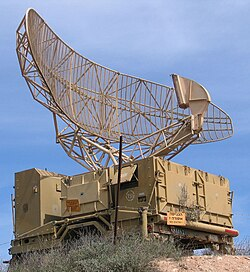
In detection trials, the calculus between active and passive sensors became apparent. Active radar systems provide accuracy in tracking yet are susceptible to jamming due to their powerful electromagnetic emission. Passive radar systems are less susceptible to detection yet are less accurate in tracking, such that accuracy in firings remains in question for mobile air defenses in cluttered spectrum environments especially when faced with hostile jamming scenarios.

3. Low-C Collateral Defence
In addition to kinetic interceptors, Fly Trap 4.5 examined some of the emerging non-kinetic alternatives such as directed energy and electronic disruption. Among the technologies that particularly caught attention is the one that can disable rotor-based UASs in swarms without causing any damage. In this case, scalable use of such technologies can be considered transformational. In fact, the need for such technologies is such that at least one of them has had its testing process fast-tracked by NATO.
4. xTechCounterStrike’s Competitive Pipeline
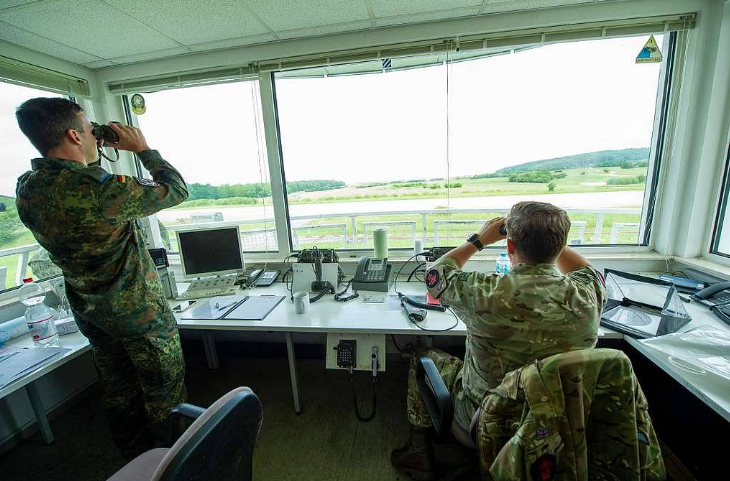
Also occurring in parallel was the xTechCounterStrike challenge that looked for 15 finalists out of 200 companies to be judged at Putlos, and the four winners were awarded $350,000 each and access to the GTEAD Marketplace. Rapid acquisition of promising systems means that promising systems are put in operation testing instead of taking the usual procurement process. Sgt. Lukas Hollcraft of the judging panel said that it is important to note that it is valuable to get feedback from the operators about what the future needs in terms of systems.
5. Ukraine Lessons of Drone Saturation Attacks
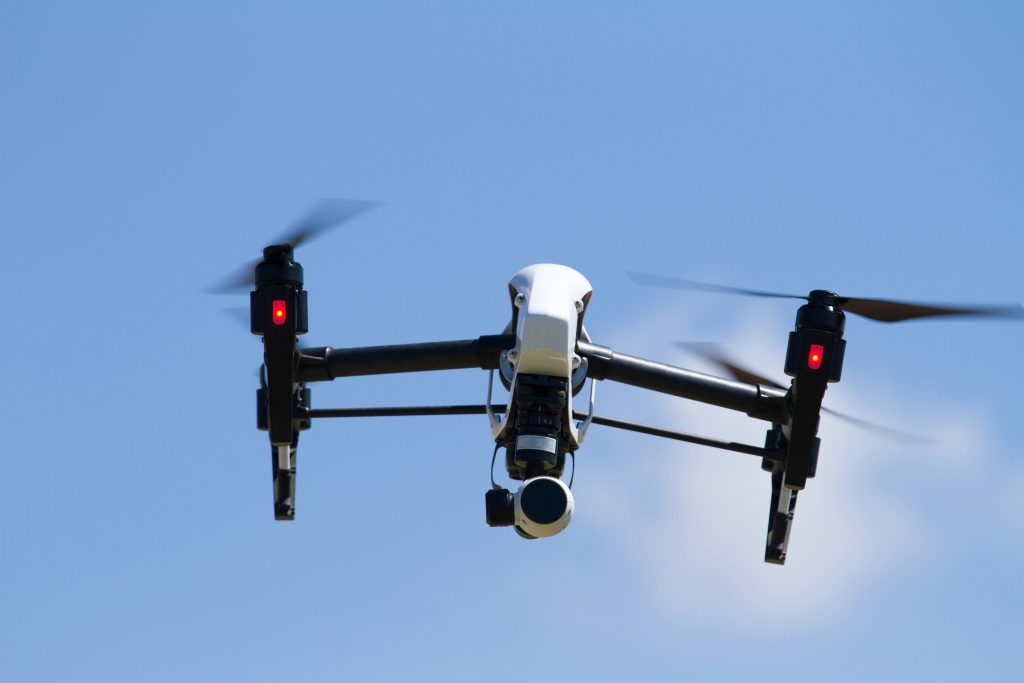
FlyTrap 4.5 is fueled by Ukraine’s experience in which drones that are cheap and swarming in nature contribute to 75% of the casualties on both sides. The exercise included scenarios that mimic this saturation and trained the NATO forces on operating in situations that are comprised of swarming aerial attacks that include quadcopters, loitering drones, and FPV kamikaze drones.
6. Contested Electromagnetic Environment Operations
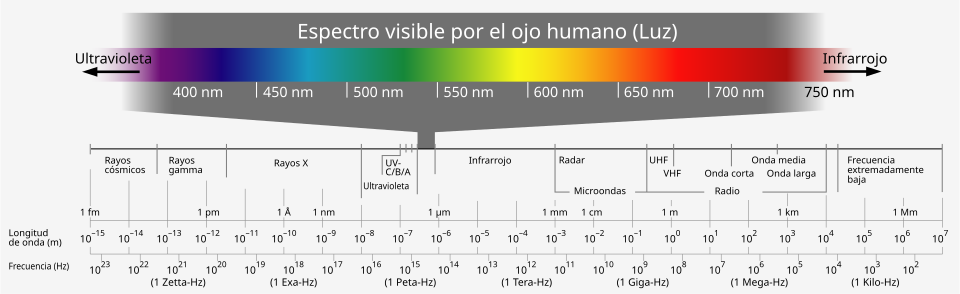
Jamming and electromagnetic spectrum interference are now considered staples of conflict between peers. FlyTrap 4.5 also included this scenario, challenging systems to work in an actively jammed frequency range of 30–20,000 MHz. Solutions like low prob of detect/intercept, beamforming, and frequency hopping were tested for preserving communication between the sensor and effector. Soon, the Pentagon will test this further in Demonstration 6, requiring autonomous operation in the EMS during electronic attacks on the mission objective.
7. Directed-Energy Weapons on the Horizon
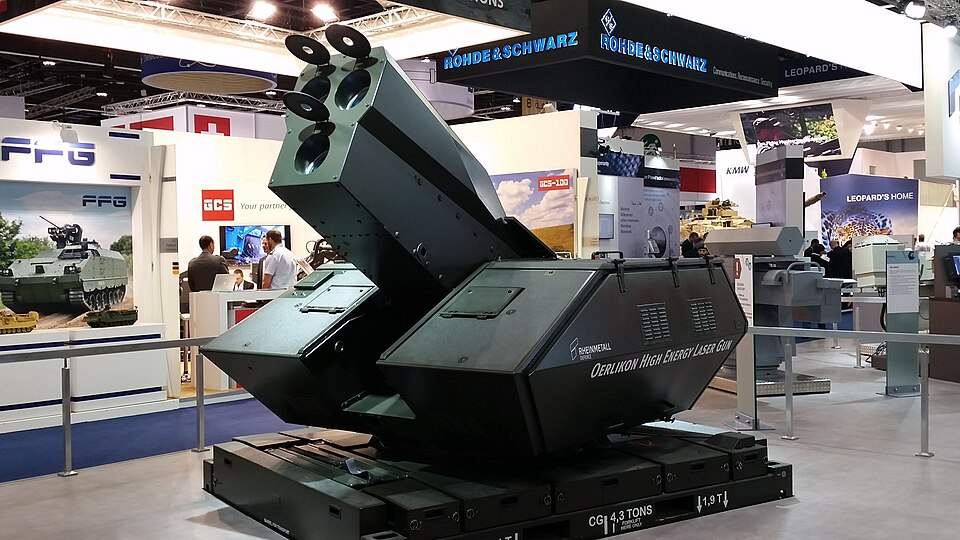
Non-kinetic efforts are reflected in the Army’s Enduring High Energy Laser (E-HEL) program, which aligns well with FlyTrap. Planned capable systems are required to be capable of hard kills on Groups 1-3 drones, work in a palletized and vehicle-mounted configuration, and be integrated with Forward Area Air Defense indications. Range-proven beam control systems will be tested for scalability in terms of mobility and rapid-deployment readiness.
8. Rapid Allied Training for New Systems
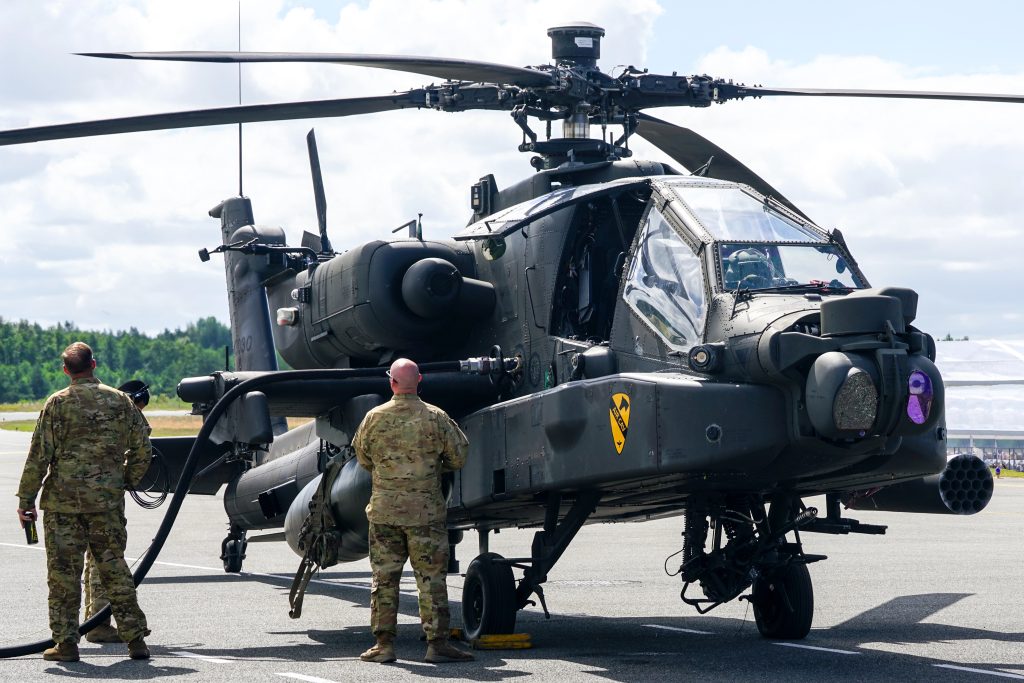
In Poland’s Lipa range, “a Train the Trainer course, conducted over 20 days, certified Poles, Romanians, and US citizens in use of an established, proven c-UAS platform,” reported DoD News. US Air National Guard Captain Justin Atkins of US European Command explained this in terms of “the Eastern Flank Deterrence Line” that “…is critical to this effort” and that “building deterrence must be and can be an enduring, collective effort in which every sensor, every effector, and every operator contributes to our mutual defense.”

9. Collaboration between Industry and Military at Unprecedented Levels
FlyTrap 4.5’s range environment facilitated direct engagement between procurement authorities, commanders, and engineers—that is, face-to-face communication, sans the need for any presentation filters. “Brutally honest and refreshingly tactical” described the view of one of the radar engineers, who described testing scenarios in which their systems were pitted “against live swarms in real-time.” Even in early discussions, joint solutions that outperform separate systems are emerging in vendor teaming arrangements.
“Project FlyTrap 4.5” showcases the radical change in the approach to countering drones in the NATO framework—a move from reaction to proactive and scalable solutions. By integrating the realism of current operations and competitive innovation pipelines, the US Army aims to prepare forces for the saturation, speed, and spectrum of drone attacks that constitute modern drone warfare. In this light, the Baltic tests were only phase one of an ongoing process of adaptation to define air defenses of the Eastern Flank of NATO in the coming years.


