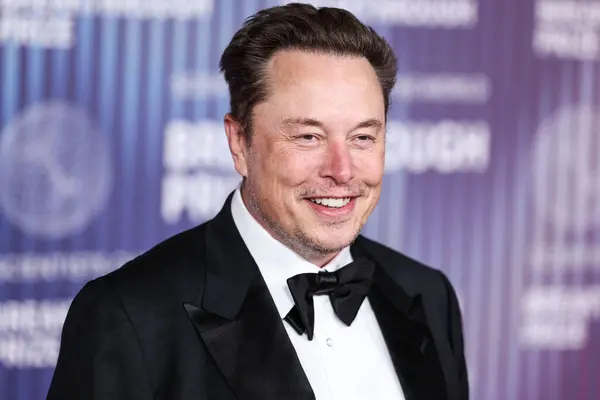
It’s not every day that the world’s richest man predicts the end of both jobs and money. But during the U.S.–Saudi Investment Forum, Elon Musk did just that: in a decade or two, AI and robotics will make work optional, currency irrelevant. And his analogy, deceptively simple, was that one would work for the same reason people tend their vegetable gardens: it was far more work than buying groceries but could be a fun way to spend one’s time.
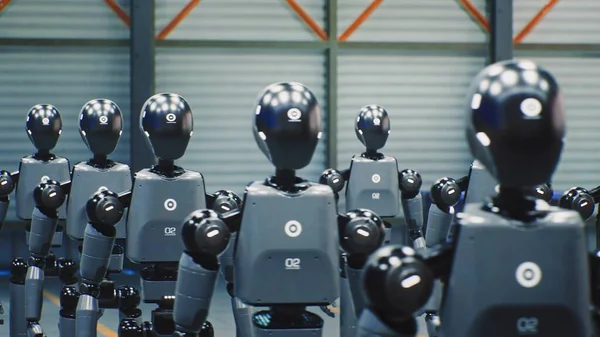
1. Musk’s Vision-Robots as the New Workforce Backbone
Musk’s prediction relies on millions of robots joining the workforce, productivity racing ahead to the point where working is optional. At the center is Tesla’s Optimus humanoid robot program, which he sees accounting for 80% of Tesla’s value in the future. The technical ambition is enormous: humanoids that can manipulate things with their hands, move around autonomously, and be integrated into complex industrial workflows. But production delays and the high cost of robotics remain significant barriers. While AI software has seen its token-processing cost fall from $10 to $2.50 per million tokens in just a year, physical robots cost more and take longer to see cost declines due to material, energy, and manufacturing complexity.

2. Economic Skepticism: The Timeline Problem
Economists like Ioana Marinescu caution that Musk’s 20-year horizon may be optimistic. It’s because hardware is expensive and task-specific, robotics adoption naturally lags behind AI. Indeed, historical patterns have shown that breakthroughs often get harder over time as technologies mature while large language models can already augment white-collar work, millions of units of humanoid robots have to solve manufacturing bottlenecks and durability challenges and integrate into diverse environments.

3. AI’s Uneven Impact on Labor Markets
Real-time payroll data from millions of US workers reveals that employment for early-career workers in AI-exposed jobs has fallen 13% since late 2022. By contrast, in the same occupations, the employment of older workers has been stable or rising, emphasizing that AI replaces entry-level, codified tasks first. Overall, those fields with automative AI applications-such as the software coding of “vibecoding”-are being hit hardest, while augmentative uses show much less disruption. Such bifurcation suggests automation is eroding the traditional career ladder and with it, the pipeline of future managers and executives.

4. Universal Basic Income: Solution or Symbolic Gesture?
Musk’s “universal high income” echoes calls by Sam Altman for UBI as a cushioning mechanism against mass unemployment. Evidence from large‑scale pilots, such as Kenya’s and Finland’s, shows UBI can improve mental health, trust in institutions, and entrepreneurial activity. Yet studies like OpenResearch’s 2020–2023 trial found limited effects on long‑term employment quality or upward mobility. Critics argue that without structural reforms progressive taxation, equitable AI access, and computational justice UBI risks becoming a form of symbolic violence, legitimizing the dominance of AI capital owners while offering minimal redistribution.
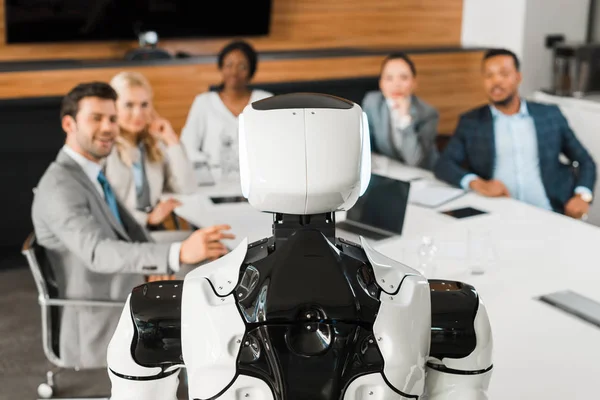
5. Engineering the Post‑Labor Economy
Anton Korinek’s modeling of AGI scenarios describes economic trajectories in which AI can perform all human tasks in a matter of decades. In aggressive scenarios, wages collapse within five years of AI takeover, while GDP growth surges to 18% annually-mostly to the benefit of capital owners. Technical constraints will include: scarcity in irreproducible resources like land and raw materials, energy limits for compute‑intensive AI, and the necessity of human oversight in AI alignment. Engineering challenges include scaling compute infrastructure, deploying embodied AI across industries, and balancing environmental impacts from surging energy demand.
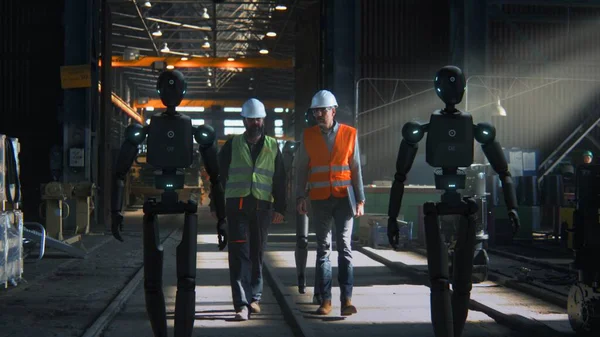
6. Robotics Scalability and Cost Curves
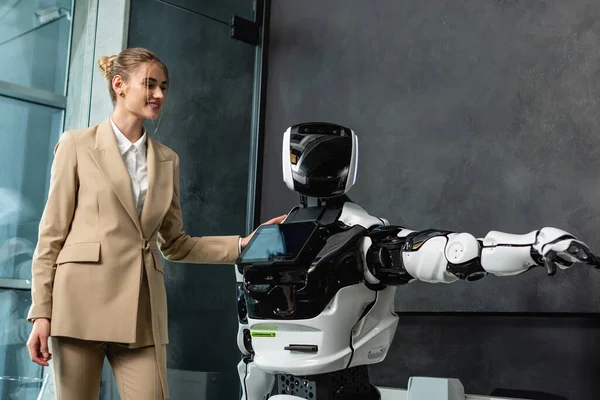
Humanoid robots face special scaling challenges. Models currently available from 1X’s NEO or Unitree’s consumer-grade bots cost tens of thousands of dollars, limiting adoption outside high-margin sectors. Mass production will depend on progress in lightweight materials, efficient actuators, and battery energy density. While AI can be distributed at near-zero marginal cost across the world, physical robots have logistics, maintenance, and safety certification. This asymmetry might make Musk’s vision take longer to unfold, despite the increasing pervasion of AI in knowledge work.
7. Political and Social Stability Risks
Samuel Solomon warns that political structures must evolve alongside technological ones. Concentrated AI wealth risks widening inequality, destabilizing democracies, and fueling unrest. The “Magnificent Seven” tech giants have seen earnings expectations rise on the AI hype, while the rest of the S&P 493 trends downward a sign of capital concentration. If governance is not made inclusive, a work‑optional future could fracture societies along economic lines.

8. Human Value Redefined in the AI Era
Kaz Hassan insists that the point is, organizations should start valuing judgment, creativity, and cultural translation, which AI cannot replicate, rather than human output in terms of tasks completed. Engineering this in practice means workflow design where deterministic processes are handled by AI, leaving ambiguous, high‑context decisions to humans. Firms that develop “superworkers” adept at leveraging AI to amplify uniquely human contributions may outperform those pursuing full automation.
9. Global Governance and AI Commons
The benefits of AGI might concentrate in a few countries and corporations, creating an “intelligence divide.” Equitable access via engineering requires open standards, shared compute resources, and international regulatory frameworks. Without those, Musk’s post-scarcity ideal can become a patchwork of abundance in the Global North and scarcity in the Global South, as both contribute data and resources for training AI systems.
Musk’s vision of an economy where robots erase the need for work and money is technically possible in certain domains, but for it to actually happen, there has to be an overcoming of engineering bottlenecks, a marshaling of political will, and an economic restructuring necessary to distribute AI’s gains. The race is not only to build capable machines but to design the societal infrastructure that can sustain meaning, equity, and stability in a post‑labor world.


