

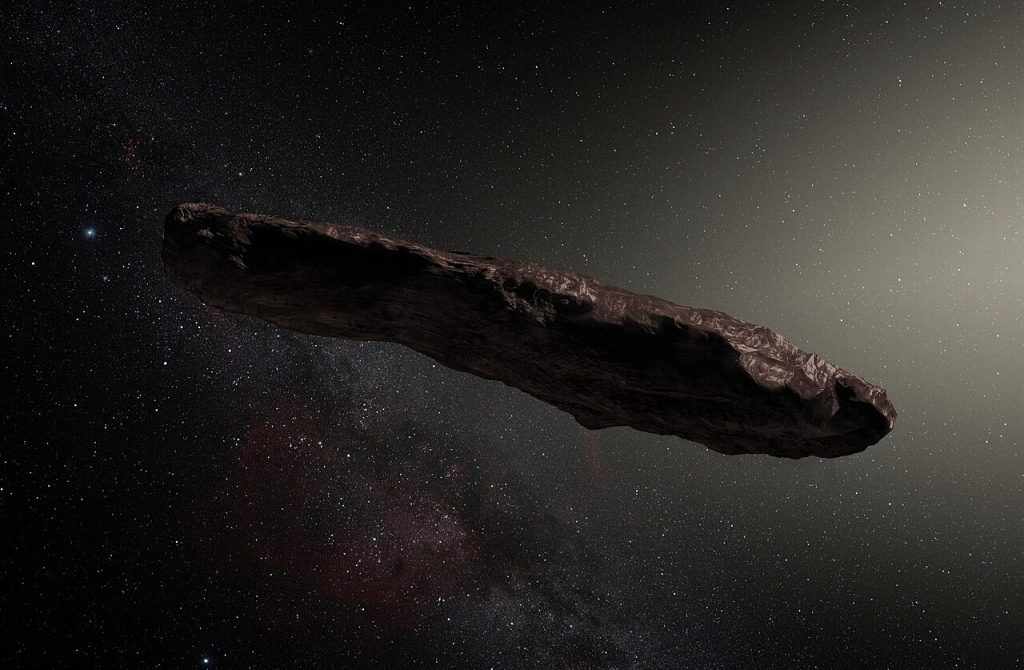
Few objects from beyond the Solar System present such a tapestry of scientific intrigue together with public fascination as 3I/ATLAS. It is the third confirmed interstellar object that was discovered on July 1, 2025, by the ATLAS survey telescope in Chile, joining the small class of 1I/’Oumuamua and 2I/Borisov. Its hyperbolic trajectory, extreme eccentricity of about 6.15, and inbound speed of roughly 210,000 km/h brand it as a true outsider, an emissary from another star system. As it arcs through the Solar System, scientists probe its composition and physical behavior, entertaining even controversial hypotheses about its origin.

1. A Hyperbolic Path Through the Solar System
Orbital calculations soon confirmed that 3I/ATLAS is unbound to the Sun, on a hyperbolic path so characteristic of interstellar visitors. Given its velocity and inclination to the ecliptic (~5°), 3I/ATLAS will be visible from both hemispheres. Geometry has allowed observations by ground-based telescopes and spacecraft at Mars orbit, Earth orbit, and deep space. ESA’s ExoMars Trace Gas Orbiter has refined its trajectory tenfold through triangulation with Earth-based data, ensuring precise pointing for upcoming campaigns.
2. Composition Changed by Galactic Cosmic Rays
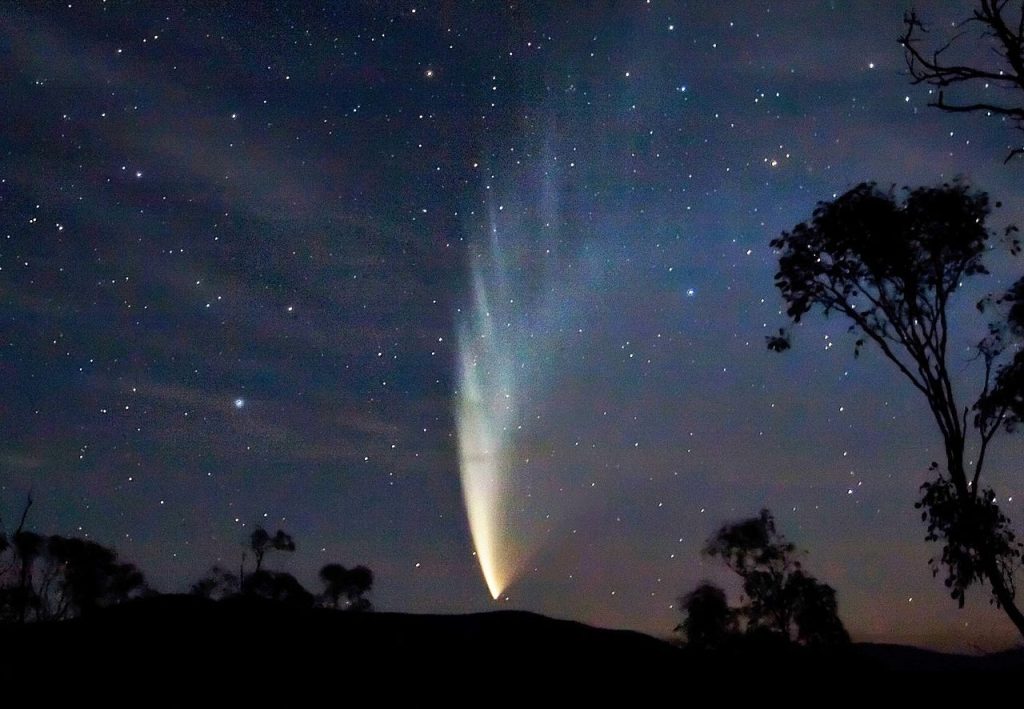
JWST/NIRSpec and NASA’s SPHEREx spectroscopy unveiled very high CO₂/H₂O ratios of 7.6±0.3, among the highest recorded to date, in concert with high CO and red spectral slopes. These data point to laboratory simulations and modeling where galactic cosmic ray irradiation over billions of years has converted CO to CO₂ and synthesized an organic-rich crust 15–20 meters deep. This crust obscures the pristine interior, and hence current outgassing is sampling processed material, not primordial ices from its birth system.
3. Multi-Wavelength Observation Campaigns
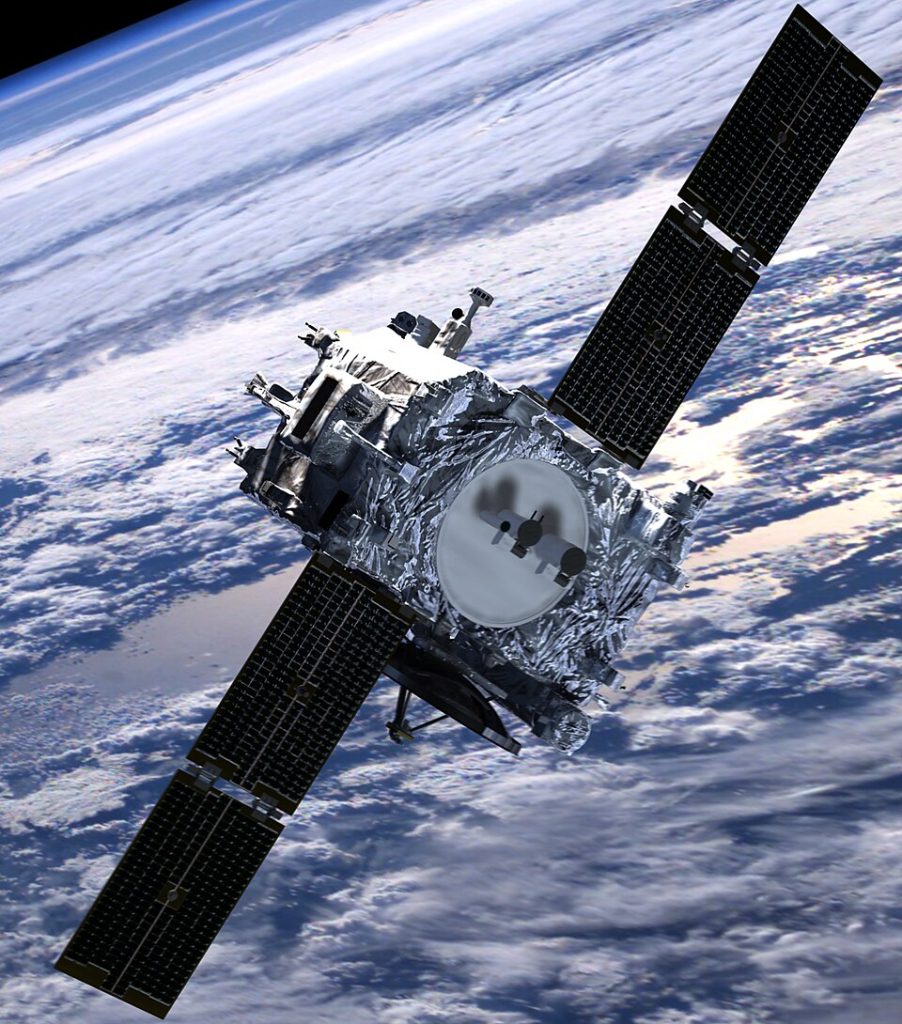
NASA established an unprecedented network of observations: in all, twelve spacecraft contributed. HiRISE-the camera aboard the Mars Reconnaissance Orbiter-took images of the comet from 30 million km. MAVEN used its ultraviolet imaging to investigate molecular emissions. SOHO and STEREO-A and PUNCH followed it through the solar conjunction, demonstrating tail evolution around perihelion. Psyche and Lucy spacecraft gave distant views that provided refining of trajectory models. Coordinated observation pushes instruments beyond the normal limitations of their usual tasks, much like trying to track a baseball in midflight from different stadium seats.

4. Spectral Signatures and Color Variations
It has been confirmed that the red spectral slope of 19%/100 nm in visible wavelengths, trending towards neutral in the near infrared, as found from Palomar and Apache Point ground-based spectrophotometry, has red slopes up to 38%/1000 Å in the UVB range with VLT/X-SHOOTER data. Interestingly, 3I/ATLAS has experienced red, green, and blue colors since its discovery, possibly because of the evolution of gas release and the effects of solar radiation on dust composition. No strong OH or CN emission bands were detected at larger heliocentric distances, placing upper limits on the water and hydrogen cyanide production.
5. Morphology of Tail and Anti-tail Phenomenon
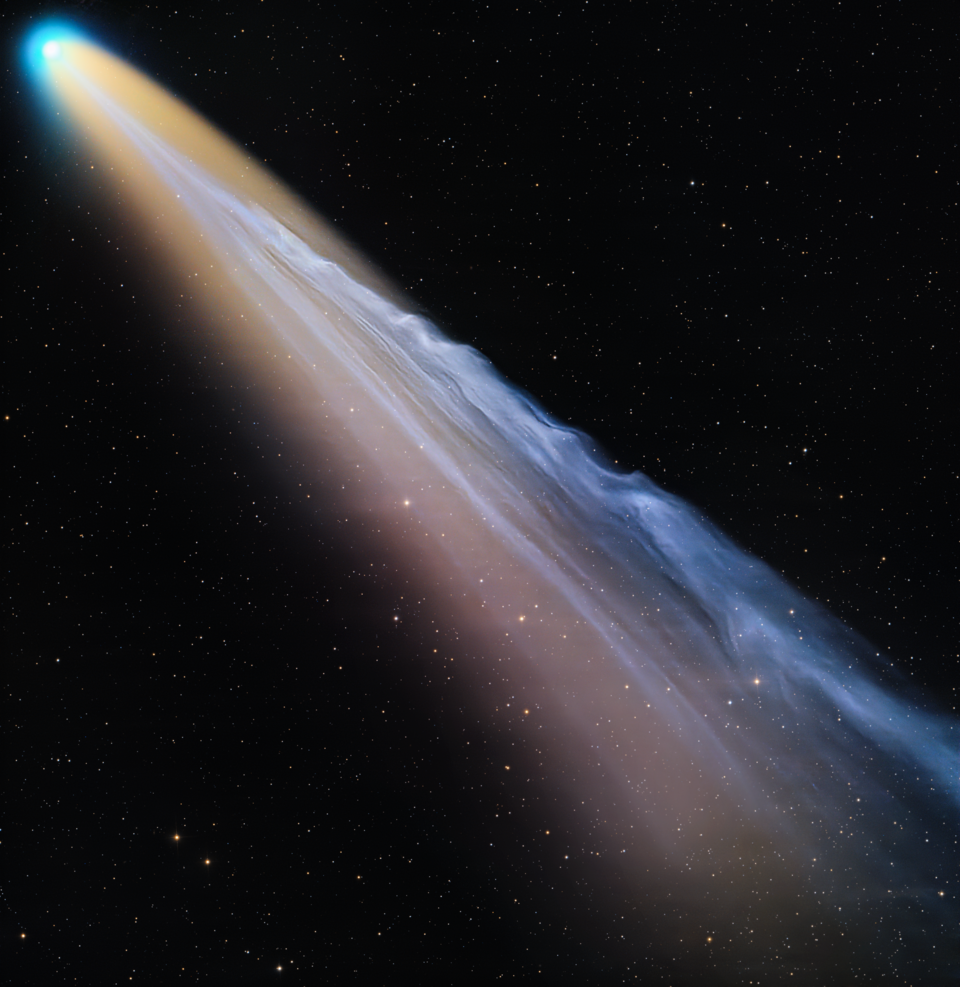
amateur and professional astronomers reveal multiple tails, including the extremely rare anti-tail pointing toward the Sun. Estimates of dust particle sizes at ~100 microns explain the geometry: large grains ejected sunward are slow to be deflected by radiation pressure. Some images reveal ruler-straight, million-kilometer jets oriented perpendicular to the Sun–comet axis a feature Harvard’s Avi Loeb notes as an anomaly compared to natural jets, which tend to curve with rotation.
6. The Artificial Hypothesis Debate
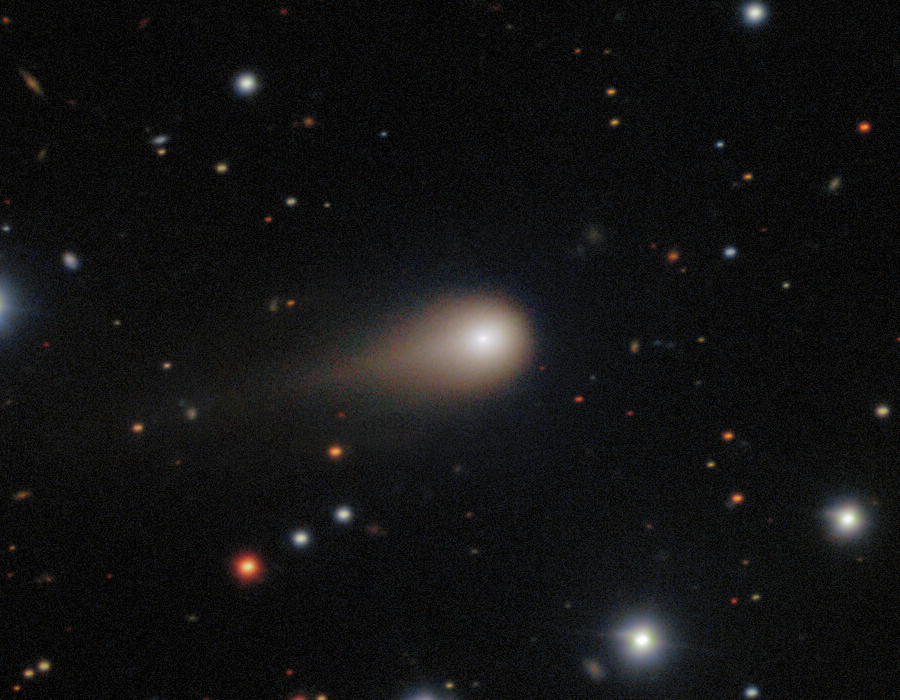
While the leading consensus among mainstream researchers classifies 3I/ATLAS as a natural comet, Avi Loeb says these three anomalies in jet orientation, early brightness stability, and lack of initial outgassing would ensure open consideration of technological origins. He likens dismissing the anomalies to “judging a book by its cover” and has called for targeted searches for technosignatures-such as heat excesses or mini-probes separating from the main body. Current datasets taken by NASA do not show any artificial signal; however, as Loeb points out, “absence of evidence does not constitute evidence of absence”.
7. Engineering Lessons from Observation Techniques
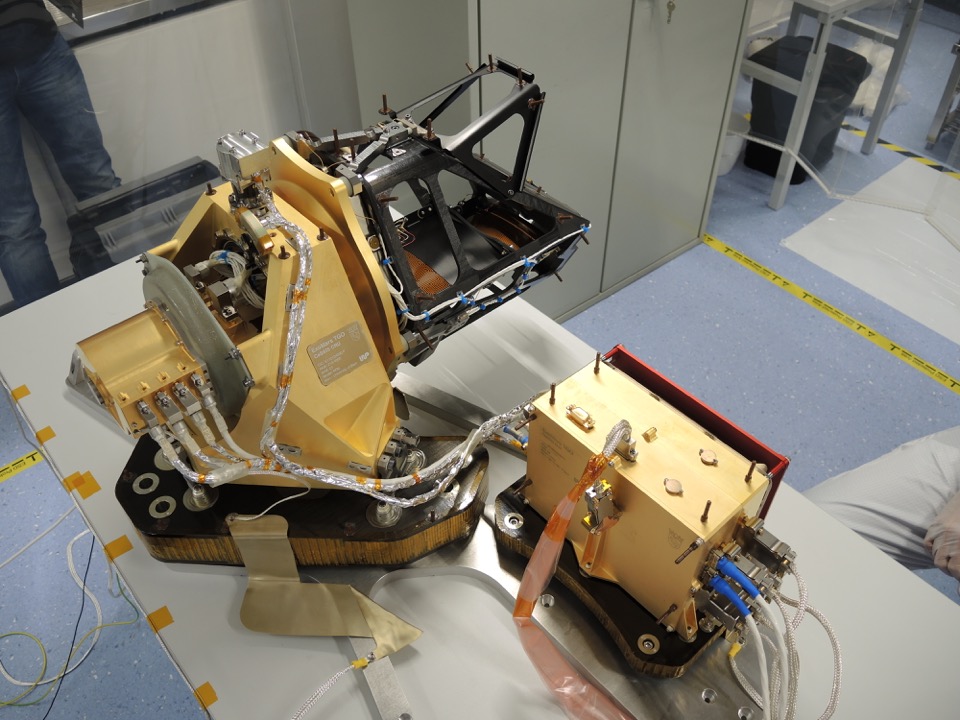
Tracking a faint, fast-moving interstellar target demands precision engineering. Spacecraft like MAVEN and ExoMars TGO adapted instruments designed for planetary surfaces in order to capture distant, dim targets. Image stacking in citizen-science networks such as UNISTELLAR compensates for motion blur, while spectrometers such as NOMAD and SPICAM attempt compositional analysis despite low signal-to-noise ratios. These adaptive strategies echo rapid-response mission concepts, including ESA’s Comet Interceptor, which will wait in space to intercept pristine comets-or perhaps another interstellar visitor.
8. Future Close Approach and Scientific Objectives
3I/ATLAS will pass 1.8 AU from Earth on December 19, 2025, in optimal conditions for Hubble, JWST, and large ground-based telescopes to analyze jet composition, speed, and mass loading rates. These data could confirm whether the jets originate either from sublimating ice pockets or from engineered thrusters.
Scientists also hope for deeper erosion past perihelion in order to expose unprocessed interior material, though models suggest this is unlikely. The journey of 3I/ATLAS is both a scientific windfall and a test of our capacity to adapt observation platforms for rare, fast-moving targets. Whether it ultimately proves to be a cosmic iceberg shaped by eons of radiation or something more exotic, its passage is expanding the frontiers of planetary science, astrochemistry, and interstellar engineering.


