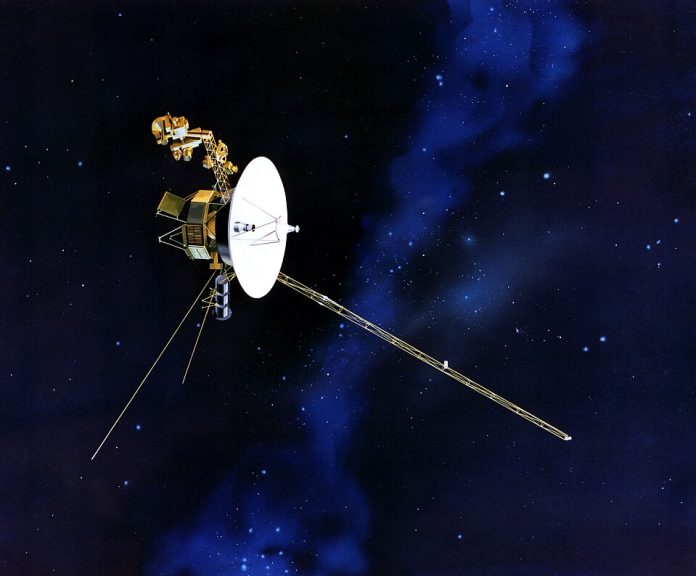
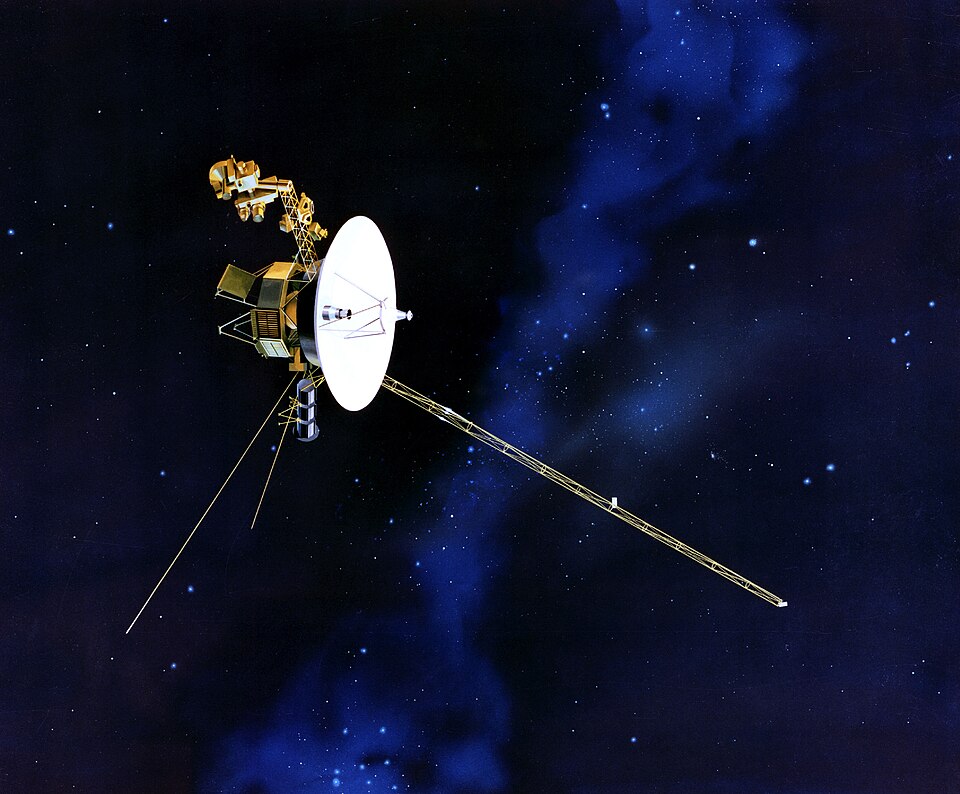
Both Voyager spacecraft have now passed beyond the most distant frontier ever reached by human technology into a region where temperatures rise to tens of thousands of degrees, magnetic fields are warped, and the Sun’s current gives way to the stillness of interstellar space. The “wall of fire” they have encountered at the boundary of the heliosphere is more than a poetic metaphor but rather a very real extreme environment that has radically revised our understanding not only of the edge of the solar system but also of the technological limits on space travel.
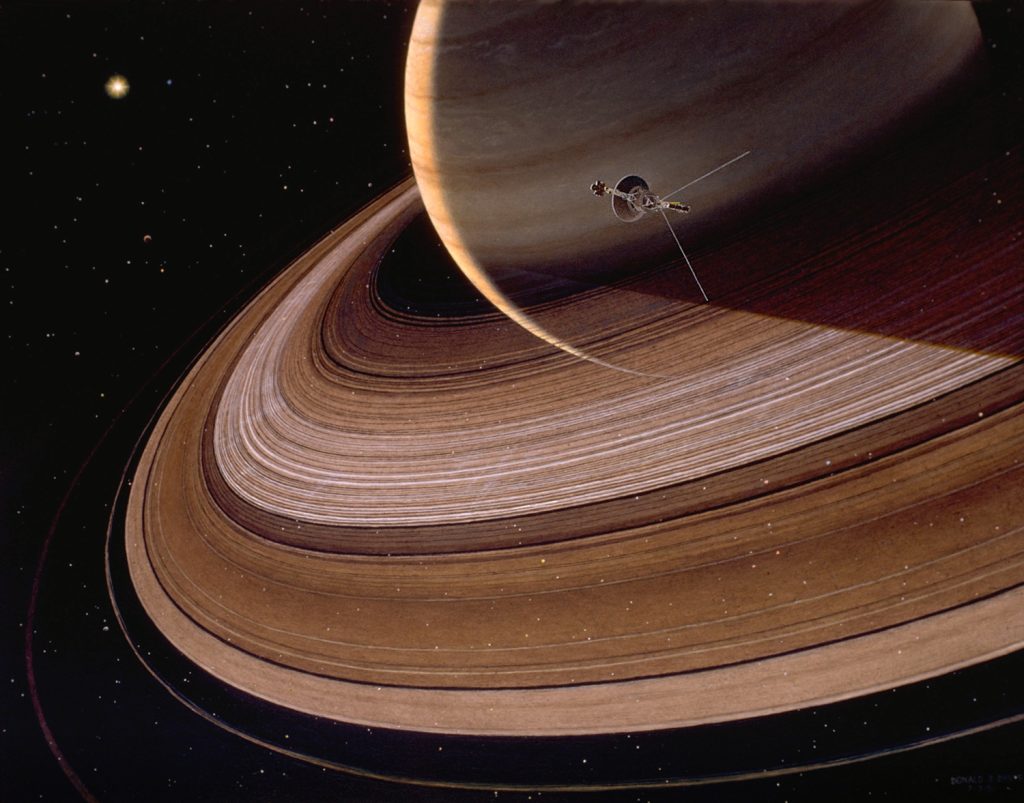
1. Heliopause, the Blazing Boundary
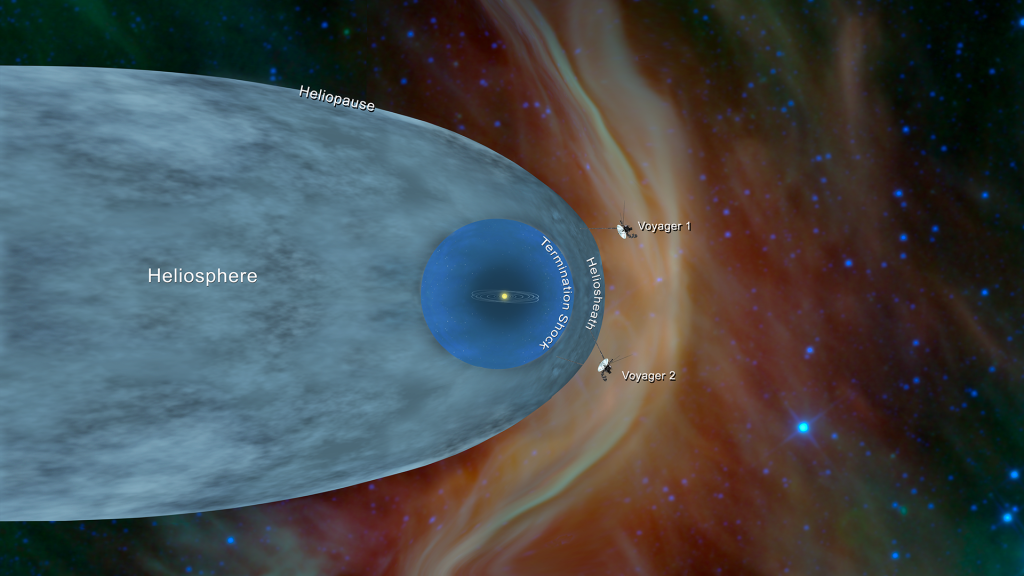
In 2012, when Voyager 1 crossed the heliopause and in 2018 when Voyager 2 did the same, their records corroborated each other: particle energies equivalent to 54,000–90,000 °F. Although the particle density is low, the kinetic energy of the ions made for a super‑heated transition zone between solar wind and interstellar medium. The crossing confirmed that the heliosphere the Sun’s magnetic bubble ends at the point where the outward solar wind pressure balances the inward pressure of the interstellar medium. What was once a theoretical region is now mapped by direct measurement.
2. Not a Simple Shape
The staggered arrival times of Voyager proved the heliosphere was not a perfect sphere but expands and contracts according to solar activity, its geometry skewed because the Sun is in motion through the galaxy. Models developed early on favored a comet‑like shape with a long tail; Cassini and New Horizons data regarding pick‑up ions – neutral atoms ionized and carried along by the solar wind – revealed instead a more compact “deflated croissant” shape, featuring twin jets rather than a trailing tail. Dominating thermodynamics in the heliosheath, these hot pick‑up ions cool down rapidly past the termination shock, reshaping the boundary.
3. Magnetic Field Mysteries
Voyager’s magnetometers picked up that the magnetic field just beyond the heliopause runs parallel to the heliospheric field inside. Both spacecraft confirmed this alignment, quite different from the previously expected abrupt directional changes, which suggested that the magnetic structures in interstellar space are far more coherent across the boundary than previously believed.
4. Solar Wind Physics and the Termination Shock
Depending on direction, termination shock is where the supersonic solar wind undergoes rapid deceleration, heating, and compression about 90–94 AU from the Sun. Voyager 2’s plasma science instrument measured the flow velocity drop to zero at the heliopause, with flow diverted sideways like a wave striking a cliff. These data give the first direct measurements of interstellar plasma density and temperature, revealing a denser, colder medium than inside the heliosphere.
5. Dynamical Boundaries Caused by Solar Activity
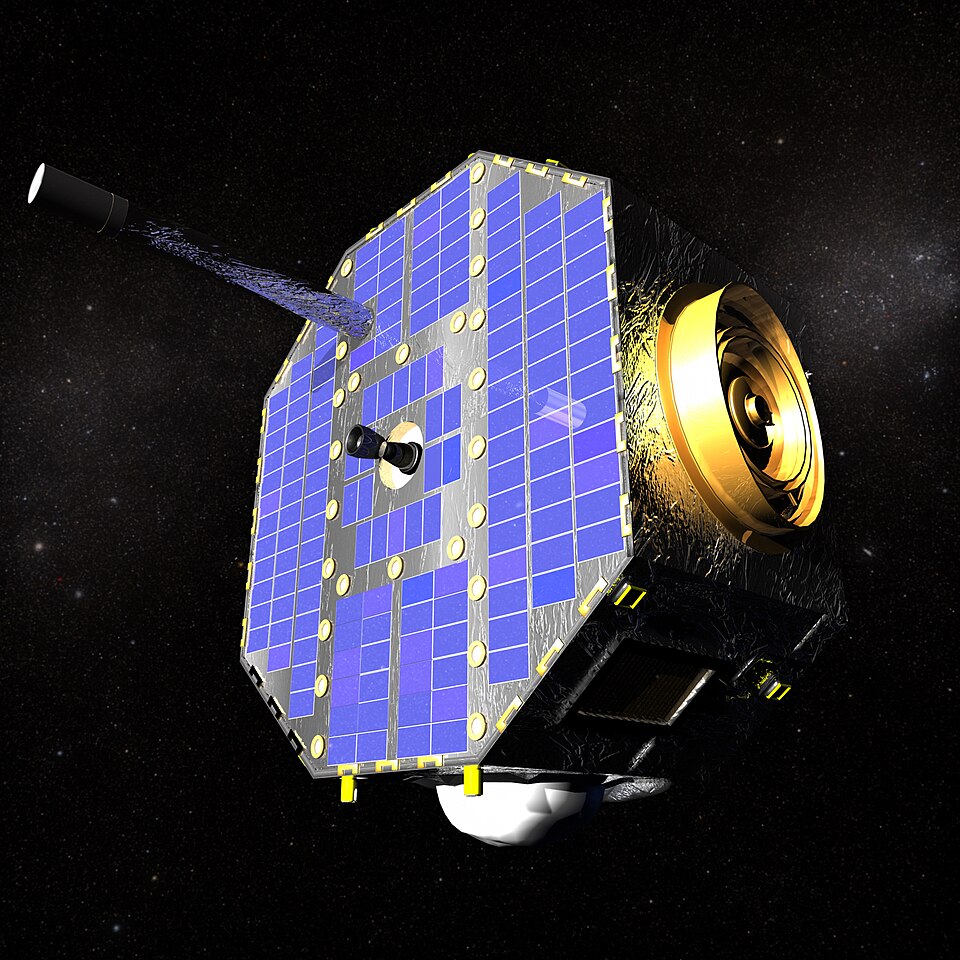
In 2014, a 50 % increase in solar wind pressure propagated outward and expanded the termination shock by about 7 AU and the heliopause by 2–4 AU. IBEX spacecraft observations of energetic neutral atoms rebounding from the edge of the heliosphere provided a time‑delayed map of this expansion. Models predict an expanding “ring” signature in ENA flux and offer a new method for measuring heliospheric dimensions and asymmetries.
6. Deep Space Engineering Wonders
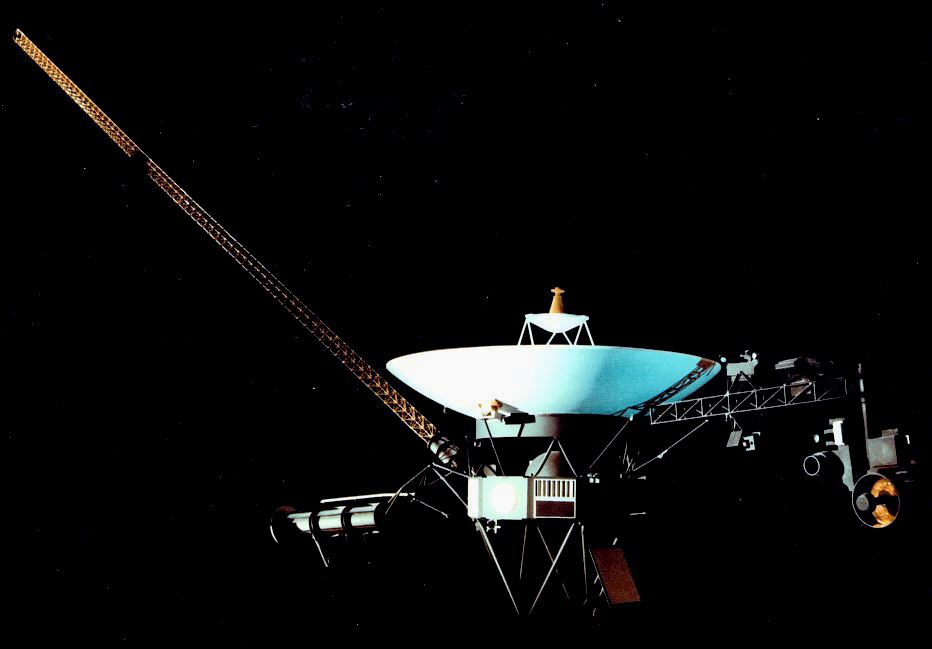
Operating almost five decades after launch, Voyager’s systems bear the ravages of inevitable degradation. In 2023, Voyager 1’s flight data system began cycling unintelligible code due to a failed memory chip. Using only 69.63 KB of onboard memory and 22.5‑hour one‑way communications delays, engineers transplanted code fragments across the memory of the spacecraft to restore telemetry. This reprogrammable architecture-which was revolutionary in 1977-has enabled survival far beyond the original mission plan.
7. Cosmic Ray Shielding and Habitability Insights
The heliosphere protects planetary surfaces and spacecraft from about 75 % of galactic cosmic rays. The understanding of the shape and variability of the heliosphere is hence very important for the protection of astronauts in deepspace missions. In fact, according to the “deflated croissant” model, the shielding efficiencies can vary with the solar cycle, thus may influence the long-term exposures during interplanetary travels. It may also provide guidance for the search for habitable exoplanets that could also have a similar protective bubble.
8. Instruments Painting a Multi‑Layered Picture
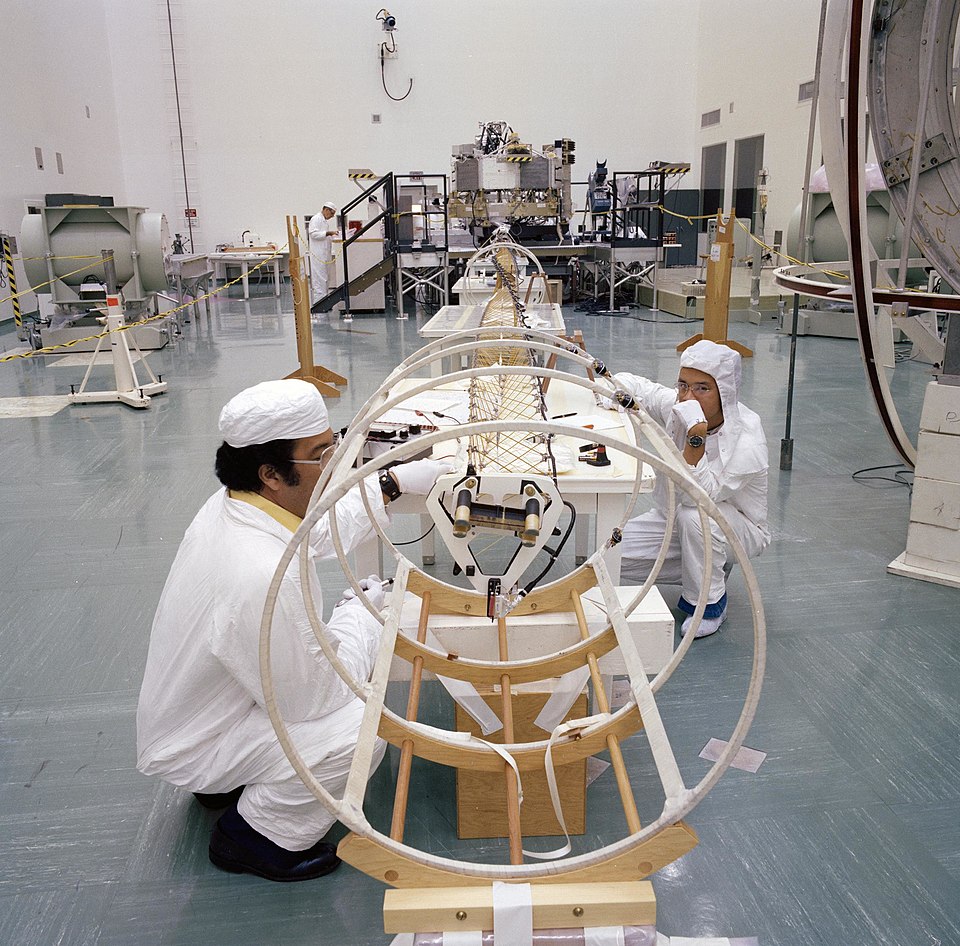
The Cosmic Ray Subsystem onboard Voyager recorded the sudden drop in heliospheric particles and the rise in interstellar cosmic rays at crossing. The Plasma Science instrument on Voyager 2 measured the first‑ever interstellar plasma velocities, while the Magnetometer mapped field stability beyond the reach of the Sun. These together form a coherent narrative of the changeover from turbulent space dominated by the Sun to the relatively stable interstellar medium.
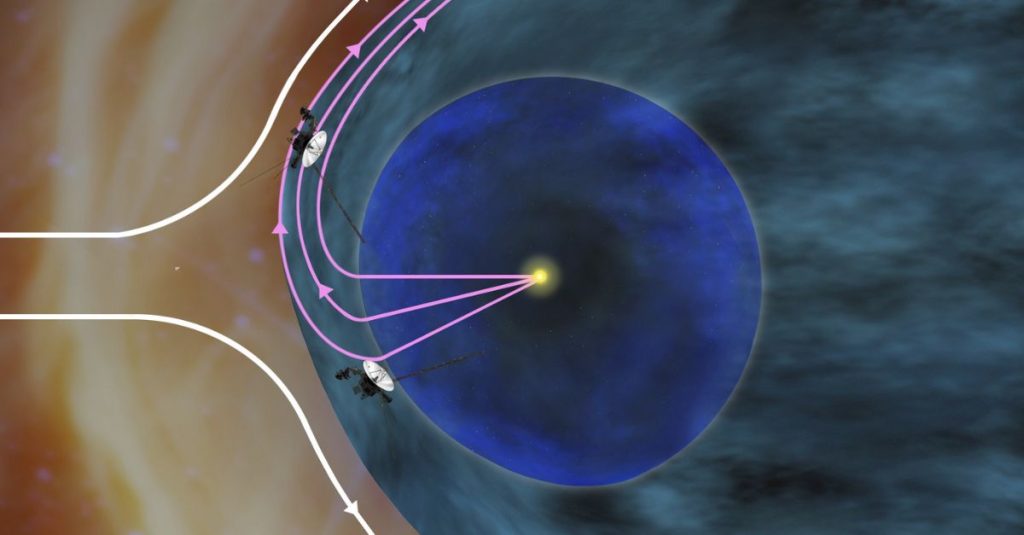
Beyond the “wall of fire,” Voyagers continue to send back data from a realm no other spacecraft has reached. The findings are refining models of the structure of the heliosphere, its dynamic response to solar activity, and its part to play in acting as a shield to our solar system. Each radio transmission from these geriatric explorers is a direct touchpoint with the great, cold ocean of interstellar space.


