“If I have seen further,” Isaac Newton once wrote, “it is by standing on the shoulders of giants.” Decades later, NASA’s Hubble and Spitzer Space Telescopes have come to embody that sentiment, each building upon a growing vision that humanity has of the cosmos. The result has been some of the most breathtaking images ever recorded, revealing the universe in wavelengths invisible to the human eye.
From giant star-forming pillars to galaxies locked in gravitational embraces, these observatories have transformed our understanding of space and fired the imaginations of people across the world. A carefully curated tour through ten such extraordinary views follow; each stand as a scientific treasure and a visual wonder.
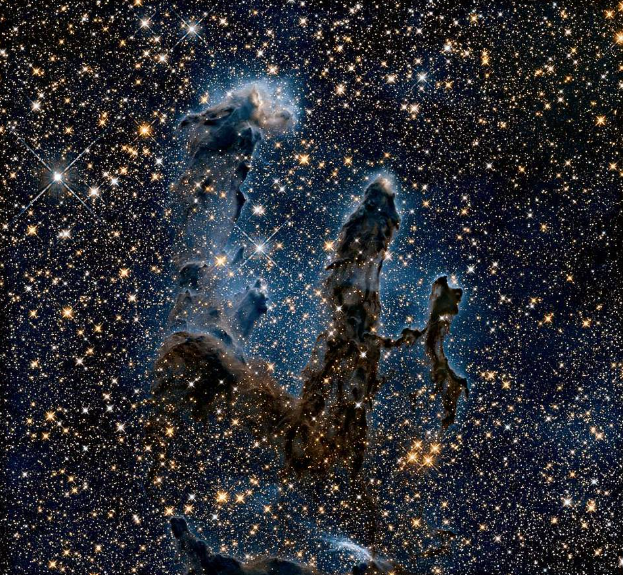
1. Pillars of Creation An Iconic Timeless Beauty
First imaged by Hubble in 1995, the Eagle Nebula’s towering columns of dust and gas were dubbed “Pillars of Creation” for serving as stellar nurseries. Hubble revisited them in infrared in 2020, peeling back obscuring dust to reveal newborn stars within. These elephant‑trunk structures, each several light‑years tall, are sculpted by intense radiation from nearby massive stars, offering a rare look at the process of star birth.
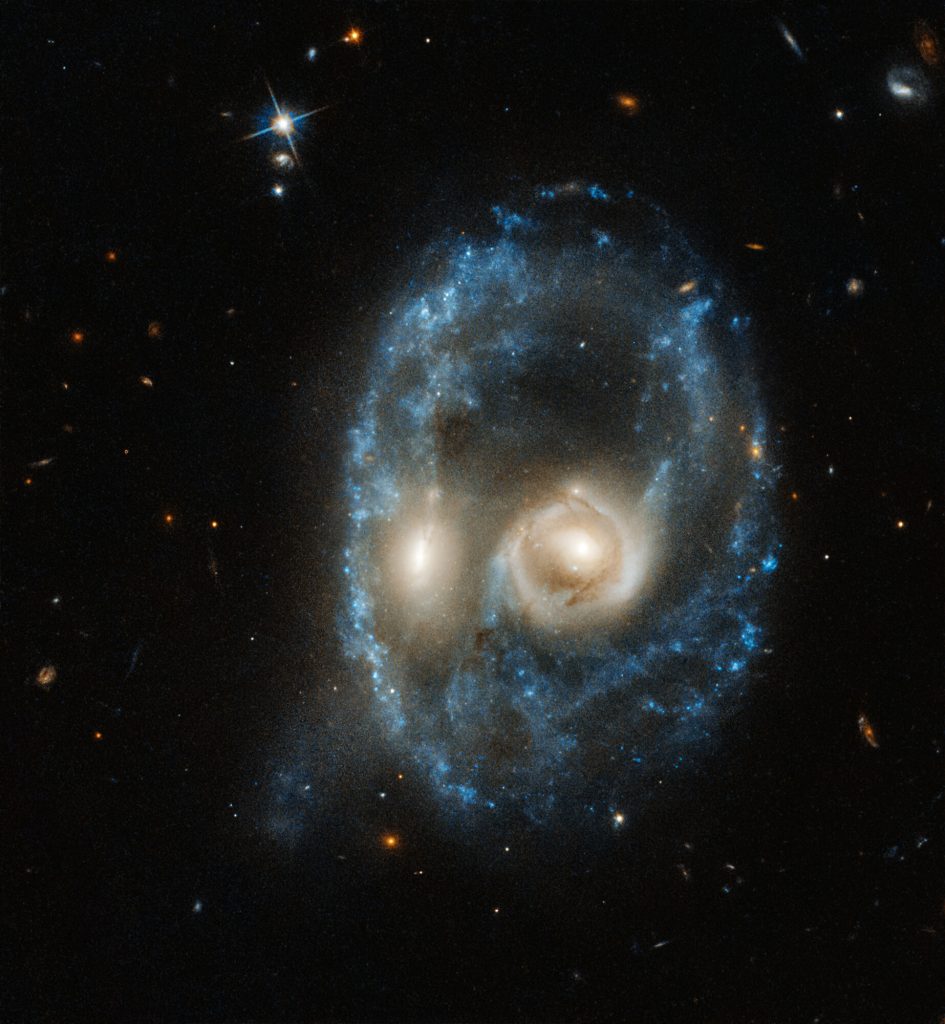
2. The Ghostly Face of Colliding Galaxies
Hubble’s spooky portrait, published on October 28, 2019, just in time for Halloween, shows two galaxy cores creating the ‘eyes’ of a spectral face. These galaxies are in the midst of a head-on collision, their disks shredded into chaotic streams of stars. Such interactions drive galactic evolution and often trigger bursts of star formation, including the reshaping of whole systems.
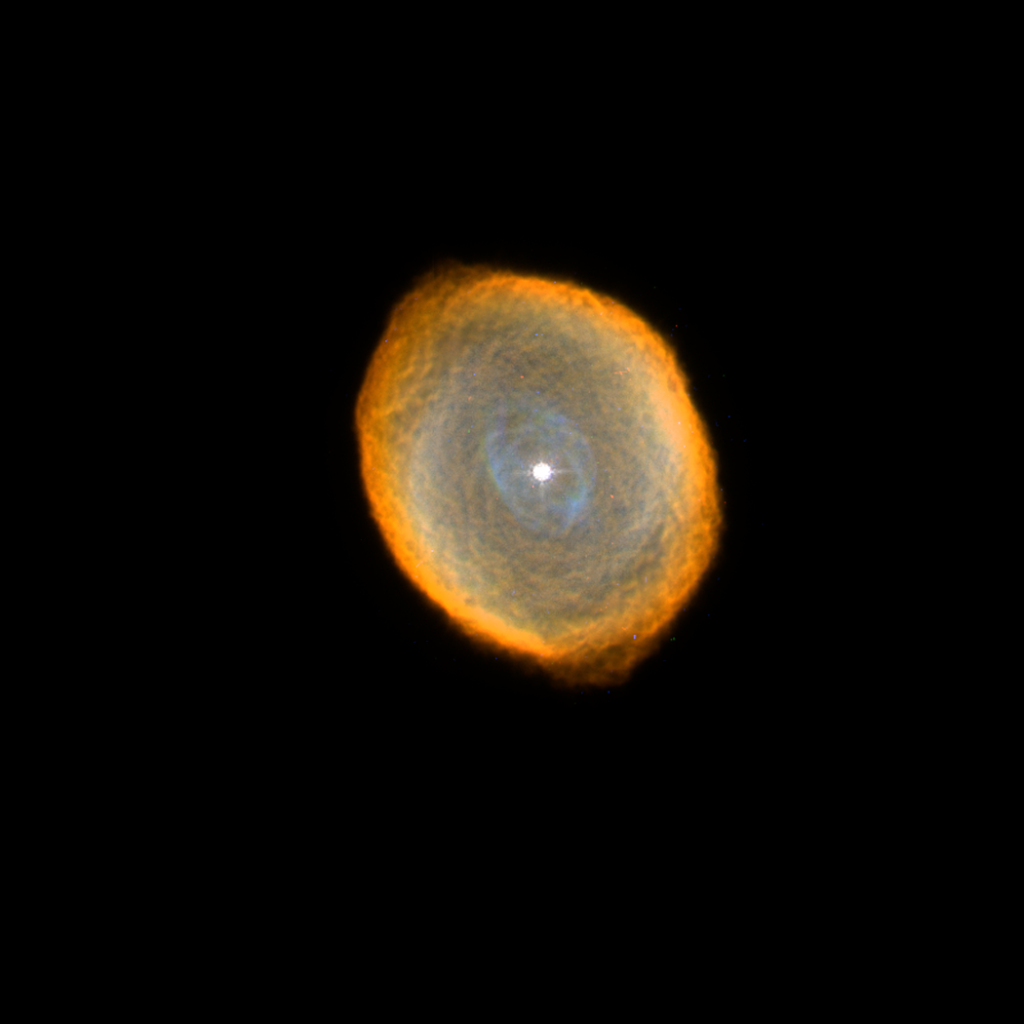
3. Delicate patterns in the Spirograph Nebula
This is the Spirograph Nebula, planetary nebula IC 418, some 2,000 light‑years away in the constellation Lepus. Hubble’s 2000 image revealed delicate textures in its purple‑orange glow, that formed when a dying star shed its outer layers. The symmetrical patterns hint at complex stellar winds and chemical processes at work in a star’s final stages of life.
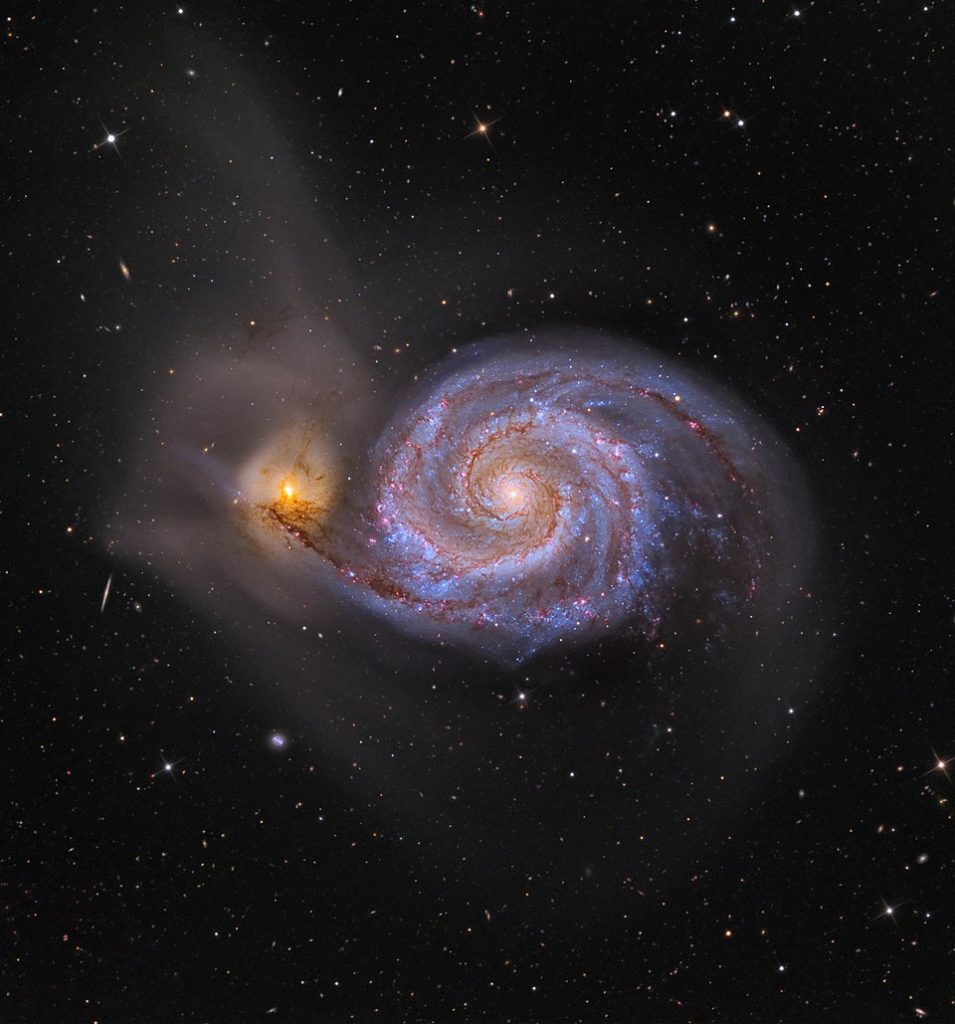
4. Gravitational Dance of Whirlpool Galaxy
In this anniversary image from 2005, the Whirlpool Galaxy (NGC 5194) seems to be wrapping its companion galaxy NGC 5195 in a spiral arm embrace. The much smaller companion actually happens to be passing behind the Whirlpool, but its motion creates a strong illusion of interaction. The Whirlpool’s grand design spiral structure, dust lanes, and vibrant star-forming regions make the galaxy one of the most photogenic targets in the night sky.
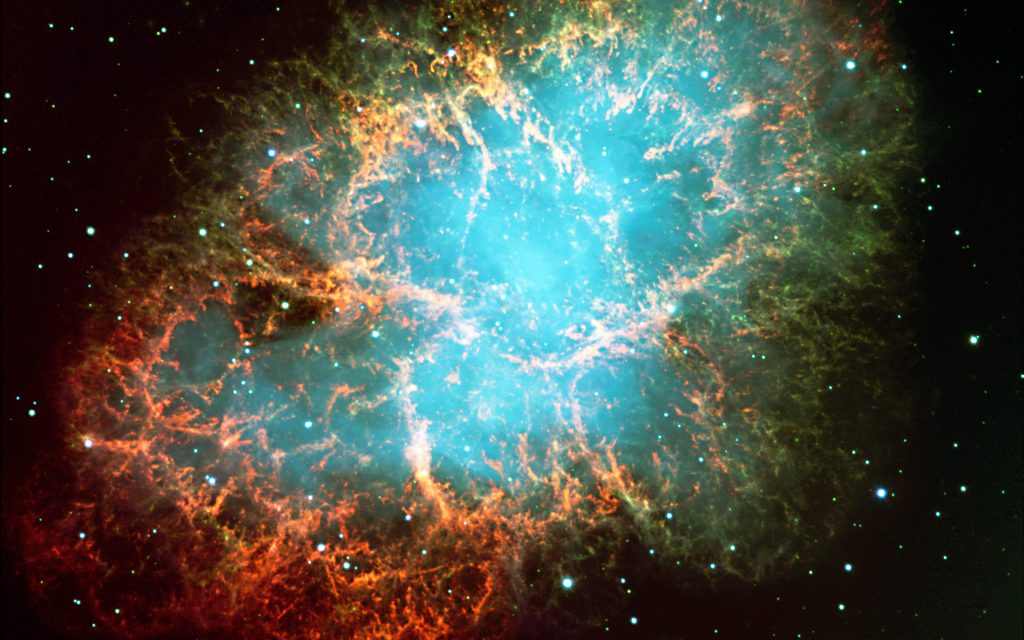
5. Crab Nebula: Giant Remnant of a Supernova
The Hubble mosaic of the Crab Nebula is about 6 light-years across; it’s one of the largest pictures taken by the telescope. This is the remnant of a massive star’s supernova explosion seen from Earth in the year 1054 CE, located 6,500 light-years away in Taurus. Filaments of glowing gas trace the expanding shock wave, while a central pulsar powers the nebula’s luminosity.
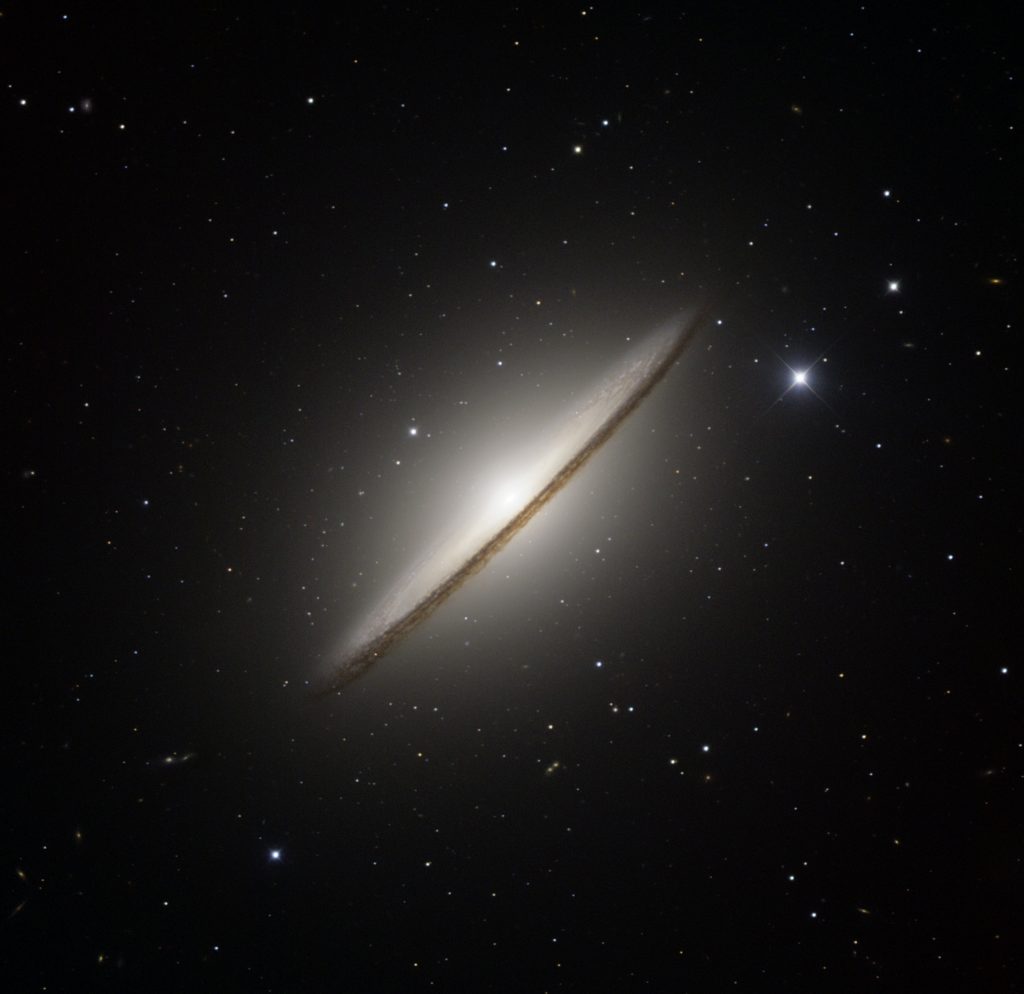
6. Sombrero Galaxy’s Hidden Dual Identity
Spitzer’s infrared vision has revealed that the Sombrero Galaxy is actually two galaxies in one: an enormous elliptical (blue-green) embedded with a thin disk (red) of stars, dust and gas. Such a discovery serves as one example of how infrared vision can reveal structures in the universe that are invisible to visible-light telescopes and have overturned many assumptions about galaxy evolution based on visible-light observations alone.
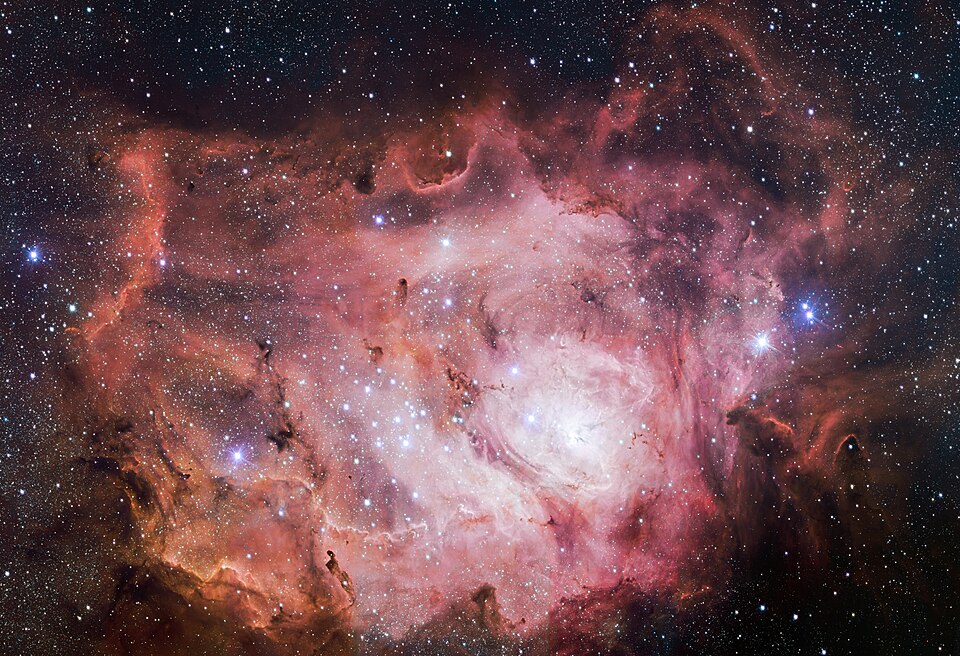
7. Lagoon Nebula’s Turbulent Star Factory
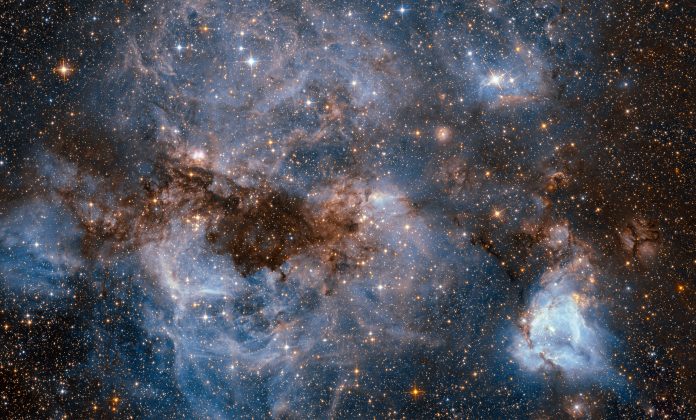
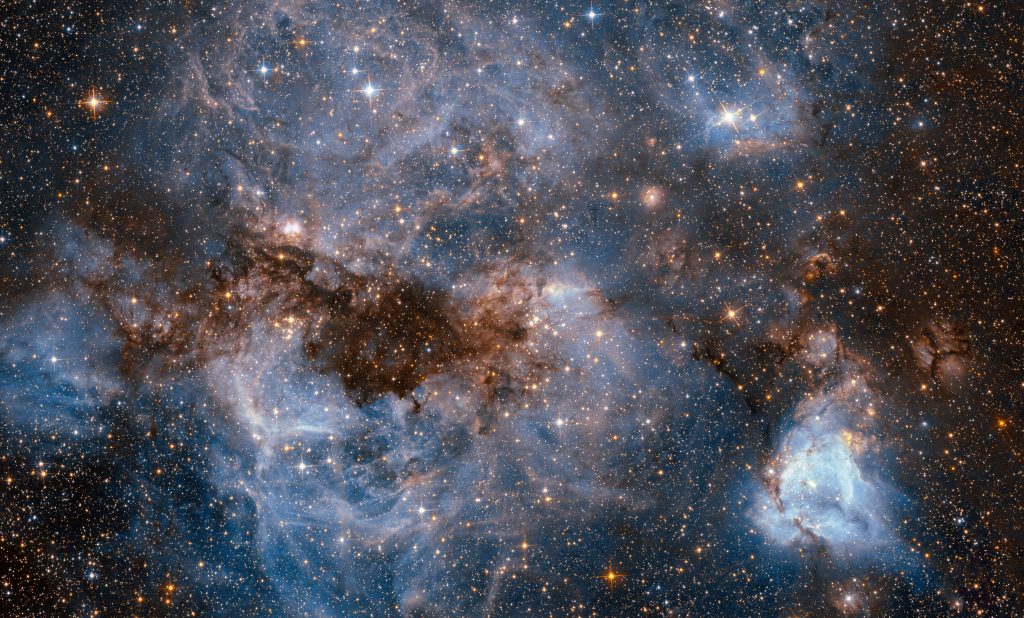
In celebration of the 28th anniversary of the Hubble Space Telescope in 2018, Hubble imaged a small section of the Lagoon Nebula, a vast star-forming region 4,000 light-years away. The portion shown measures about 4 light-years across and is flecked with young, hot stars blasting away surrounding gas. The nebula’s size-about 55 light-years wide-earns it a place as one of the largest and most spectacular star-forming regions in space visible from our vantage point, and a prime laboratory for studying how massive stars shape their environments.
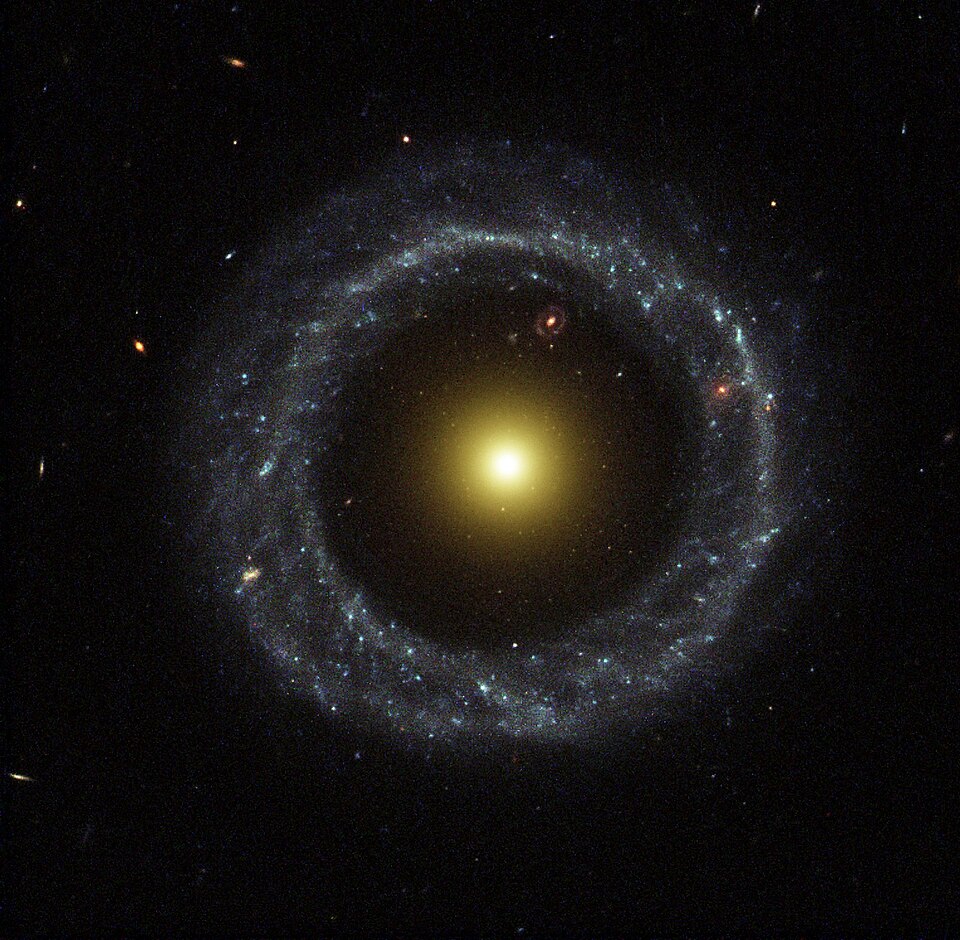
8. Hoag’s Object: A Perfect Cosmic Ring
This 2019 Hubble portrait shows Hoag’s Object consisting of a nearly perfect ring of blue stars around a dense red core. At 100,000 light‑years across, this is one of the very few known ring galaxies, and its origin remains unknown. Further, a red ring galaxy appears in the dark gap between the rings, giving the surreal scene a sense of depth.
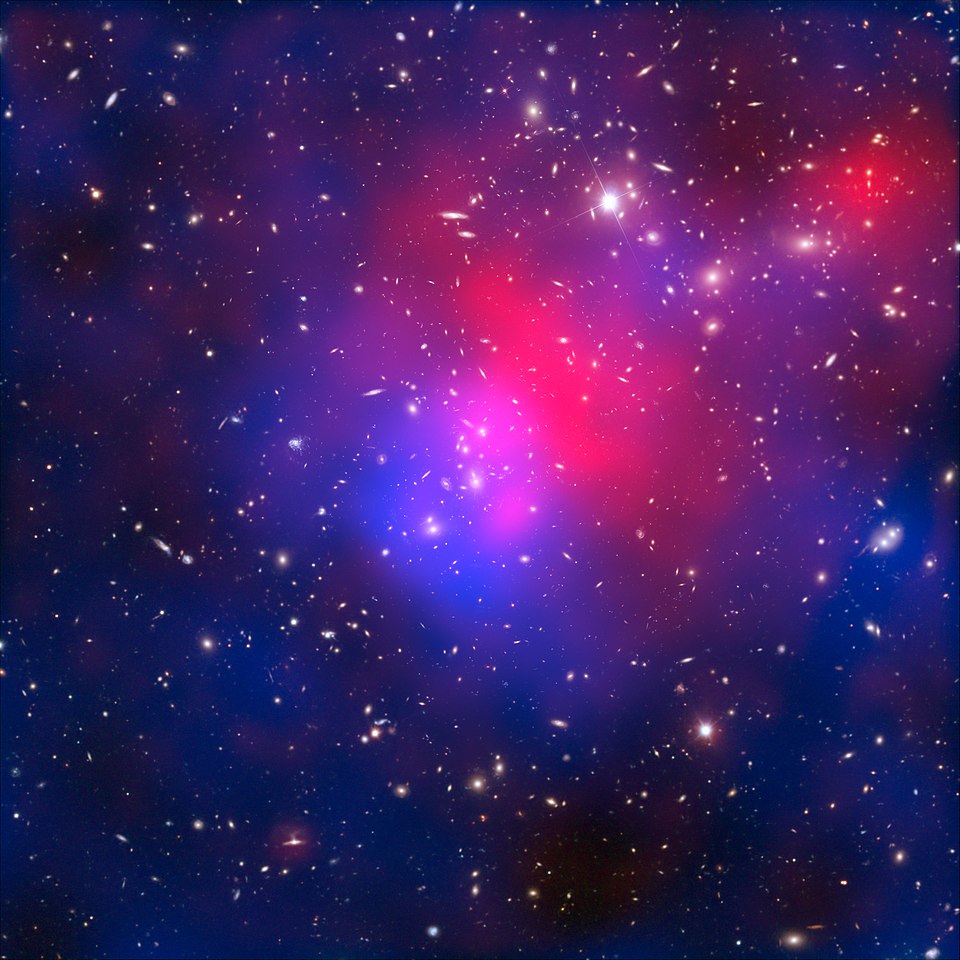
9. Abell 2744 Frontier Fields’ Deepest Cluster View
Using data from the Hubble Frontier Fields program, combined with Spitzer’s infrared imaging, astronomers are surveying Abell 2744-a massive galaxy cluster. The cluster is acting as a gravitational lens to magnify background galaxies; some of these are among the faintest and youngest that have yet been spotted. Among the objects within the area that stands out is the galaxy Abell2744_Y1, which, having only 30 times the mass of the Milky Way, is producing stars at ten times the rate of our galaxy.
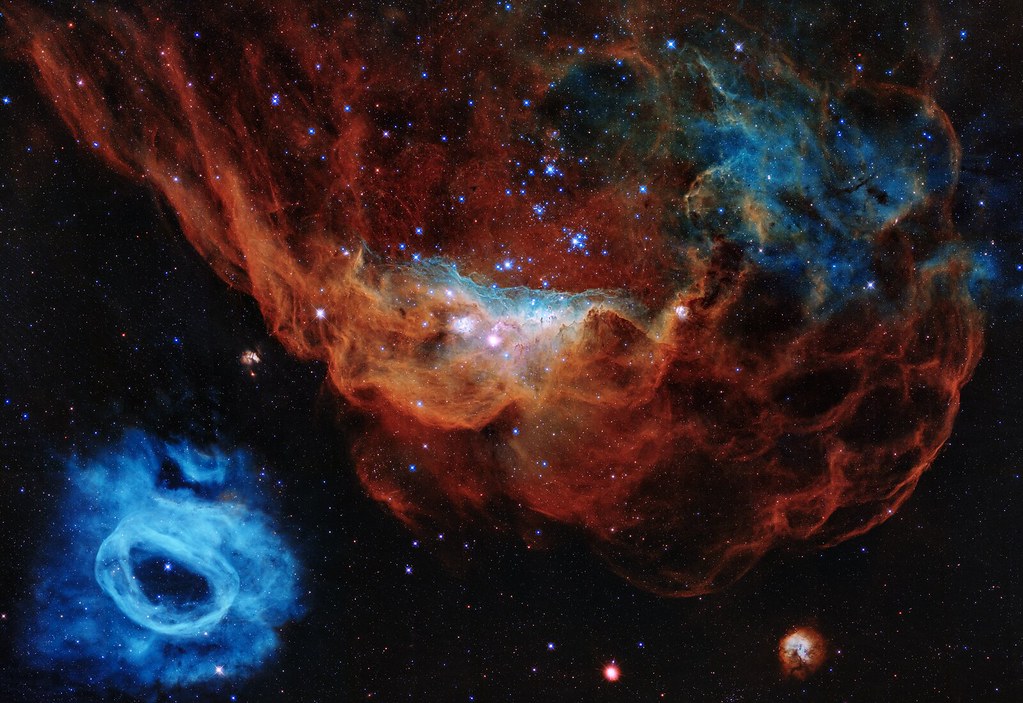
10. Cosmic Reef Hubble’s 30th Anniversary Masterpiece
This year, 2020, marked three decades of Hubble in orbit with the image “Cosmic Reef.” These vast clouds of gas and dust are the stellar nurseries sculpted by powerful winds from massive stars, reminiscent of an undersea coral reef. “This image is amazing, it’s really showing how powerful Hubble is,” said Elena Sabbi of the Space Telescope Science Institute, underscoring the observatory’s enduring ability to inspire awe.
Across three decades of exploration, Hubble and Spitzer have made clear that beauty and science are never far apart in astronomy: each picture is a work of art and at the same time a dataset full of clues about the universe’s past and future. As new observatories like the James Webb Space Telescope extend this legacy, the cosmic vistas ahead promise to be even more profound – continuing humanity’s quest to see farther and deeper into the unknown.


