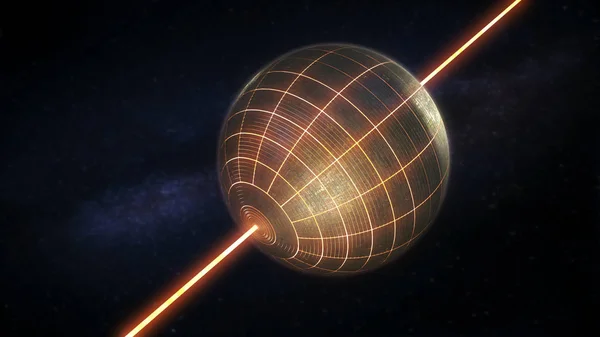
Seven stars, all relatively near to each other in cosmic terms, are radiating in ways that cannot be explained by known astrophysical processes. NASA’s infrared surveys have detected excess heat from these stars-heat that doesn’t match the usual fingerprints of dust clouds, young stellar disks, or planetary debris. The discovery has ignited scientific debate, with some researchers cautiously noting the resemblance to theoretical models of Dyson spheres, colossal energy-harvesting structures imagined by physicist Freeman Dyson.
While the signals are a long way from constituting any evidence for alien engineering, they do represent arguably the most interesting sets of technosignature candidates in recent years. The findings come from painstaking data mining of millions of stars, filtering out natural sources until only seven remained unexplained. What follows is an explanation of the most compelling aspects of this discovery, from the nature of the signals themselves to the challenges inherent in verifying their origin.
1. The Peculiar Infrared Signature
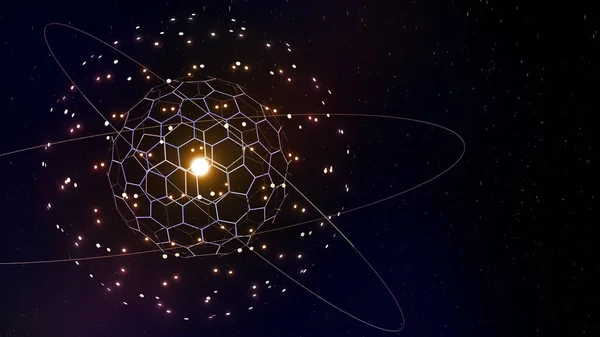
Those seven stars shine with mid-infrared radiation well above the expected levels, but without corresponding changes in visible light. That mismatch is critical, because it excludes the most common causes of the effect-dust clouds, which should scatter and dim starlight. This excess heat is symmetric and stable, a profile consistent with partial Dyson spheres. Scientists measured temperatures up to 400°C corresponding to large, orbiting collectors that reradiate absorbed stellar energy as waste heat.
2. Dyson Sphere Theory and Its Origins
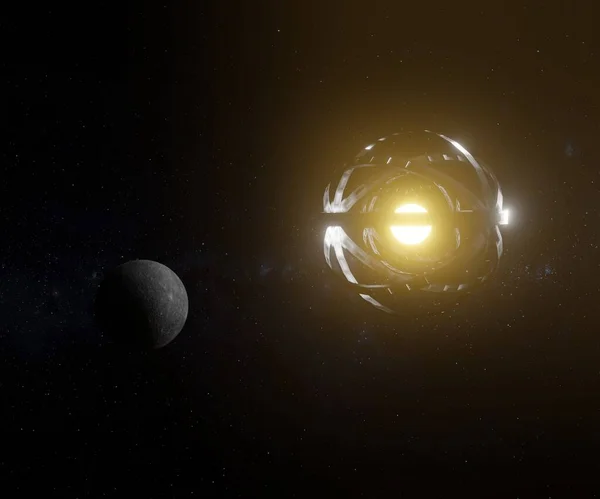
In 1960, physicist Freeman Dyson suggested the possibility that advanced civilizations would surround their stars with a swarm of structures for capture of energy. Such megastructures would radiate brightly in infrared wavelengths and, conceivably, could be detected across interstellar distances. Dyson himself pointed out that the search for waste heat might reveal either alien technology or new natural phenomena. His concept, inspired by Olaf Stapledon’s 1937 novel, has since become a cornerstone of technosignature research.
3. How NASA Found the Candidates
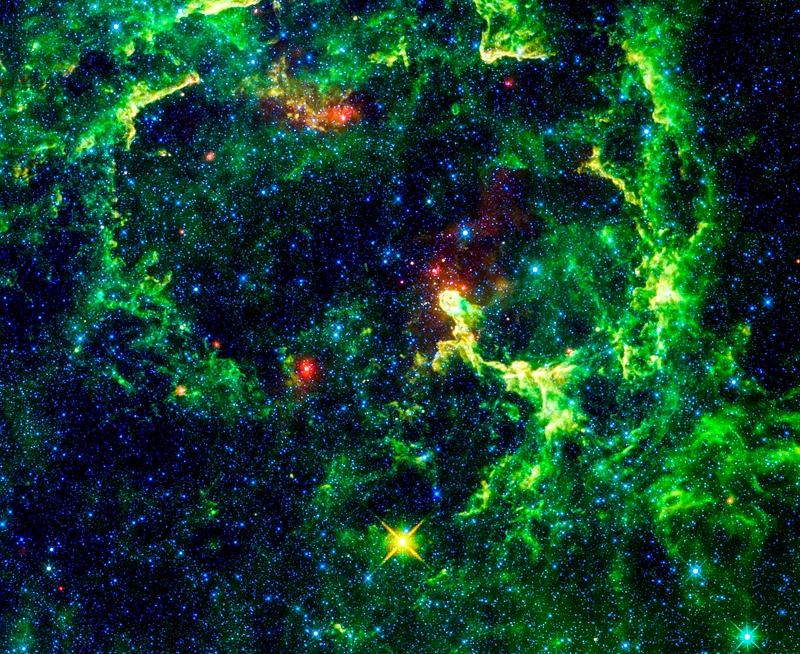
The discovery leveraged infrared data from the Wide-field Infrared Survey Explorer and the Two Micron All Sky Survey with the highly accurate stellar measurements from Gaia. Some of the most sophisticated algorithms ever developed were applied to 5 million stars, filtering out known contaminants. Cross-checks against other observatories revealed that the anomalies were not artifacts. Only seven stars, all red dwarfs within 900 light-years, passed the rigorous screening.
4. Why Red Dwarfs are Unusual Hosts
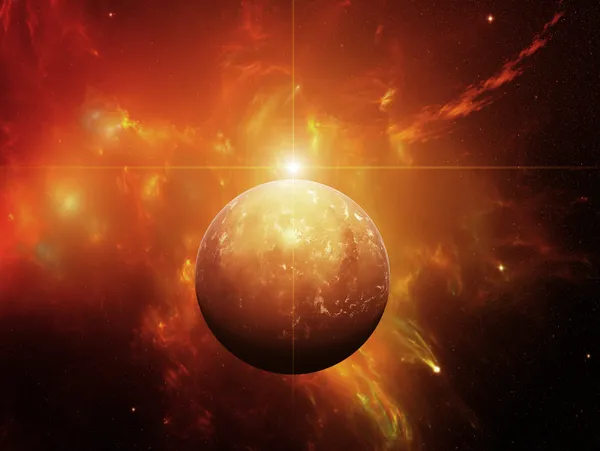
Red dwarfs are the most common stars in the galaxy, and yet warm debris disks around them are extremely rare. That rarity deepens the mystery further: It would be an exceptional case if infrared excess was caused by natural disks. Candidates differ from typical debris disks in their luminosity and temperature, which suggests an unknown astrophysical process or something more exotic.
5. Alternative Natural Explanations
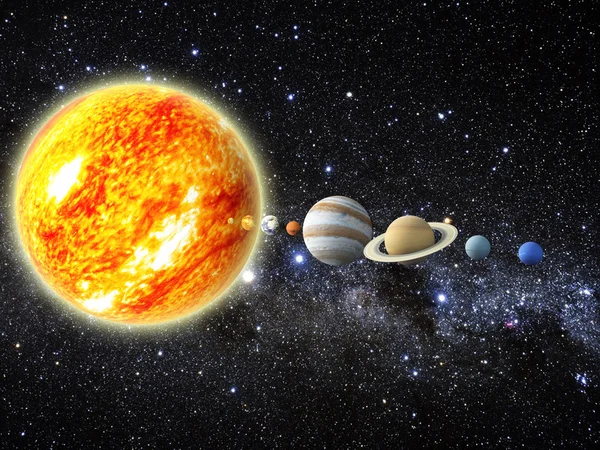
Researchers have considered the possibilities of planetary collisions, chance alignments with distant galaxies, and extreme debris disks. These hypotheses have been unable to accommodate all the data, particularly the lack of optical variability and apparent stellar age. However, as study co-author Jason Wright warned, “They could be Dyson spheres. but they could be something else as well.” The scientific priority is to exhaust all natural explanations before entertaining artificial ones.

6. The Role of Technosignature Research
Thus, the search for SETI has expanded beyond radio signals to include infrared waste heat, atmospheric pollutants, and orbital anomalies. If there are technosignatures, they are detectable signs of technology from distant civilizations. NASA’s revived interest, supported by congress, has led to a series of conferences and collaborations aimed at codifying methods and expanding searches.
7. The False Positives Problem
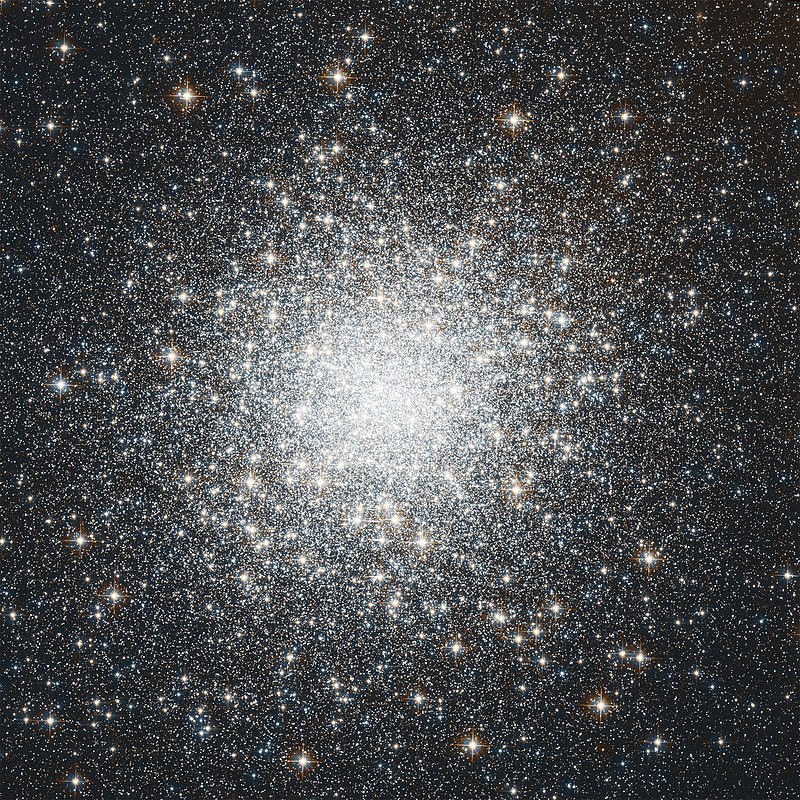
Infrared searches for technosignatures are challenged by contamination from both circumstellar dust and background sources. Sophisticated clustering algorithms, such as GLOBULAR, find patterns in interference that could otherwise produce false positives in radio SETI. Similar statistical rigor is applied to infrared searches in order to ensure anomalies are genuine and not observational noise.
8. Lessons from Past Mysteries
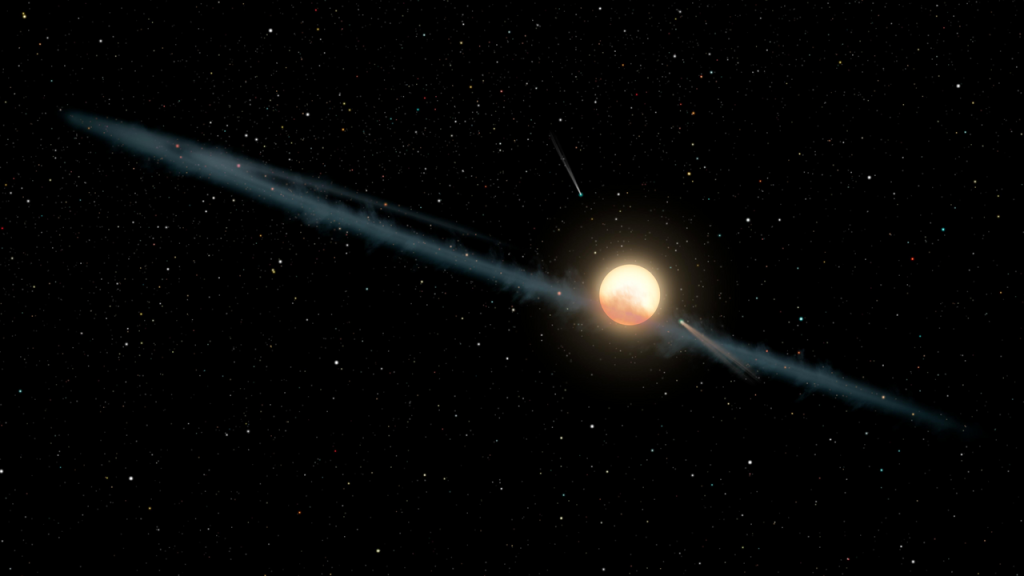
The case of KIC 8462852, the so-called “alien megastructure” star, illustrates the caution needed. Initial speculation favored large-scale engineering, while later studies favored cometary fragments as the cause. Even then, there were uncertainties. Events such as this remind scientists that when it comes to extraordinary claims, extraordinary evidence is called for-and sustained observation.
9. Next Steps with the James Webb Space Telescope
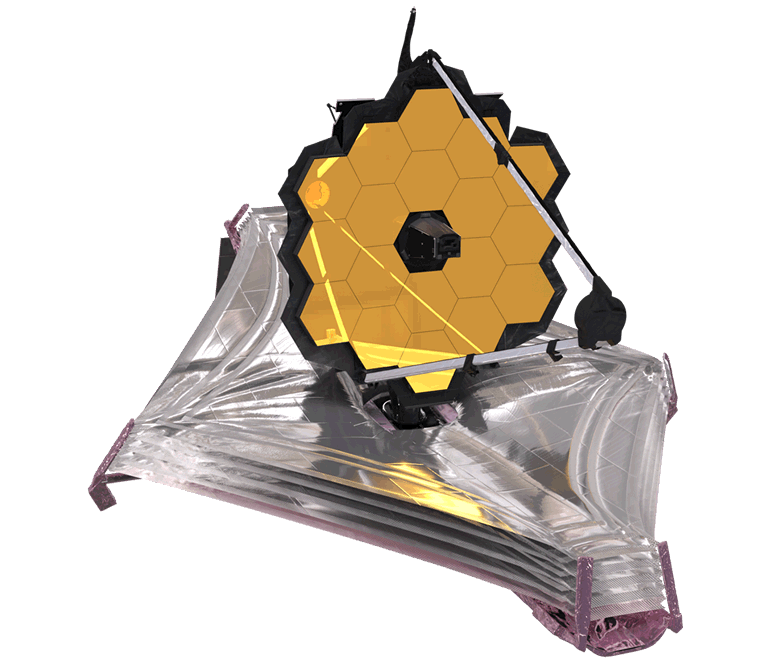
The James Webb Space Telescope offers both the resolution and sensitivity to directly study these candidates. Planned follow-ups include targeted spectroscopy to determine whether the infrared emission matches the single blackbody source expected for a megastructure or is due to a complex mix of natural processes. Access to Webb’s time is competitive, but the potential payoff-a confirmed technosignature-would be historic.
Those seven stars are rare curiosities amidst an ocean of data, interesting precisely because they don’t comply with easy explanations. Whether they prove to be the artifacts of engineering or some unknown astrophysical process, this investigation will shed a better light on stellar environments and also on the limits of current astrophysics. In the words of Freeman Dyson, the search is worth it-even if no civilizations are ever found, new wonders of the universe may yet be revealed.


