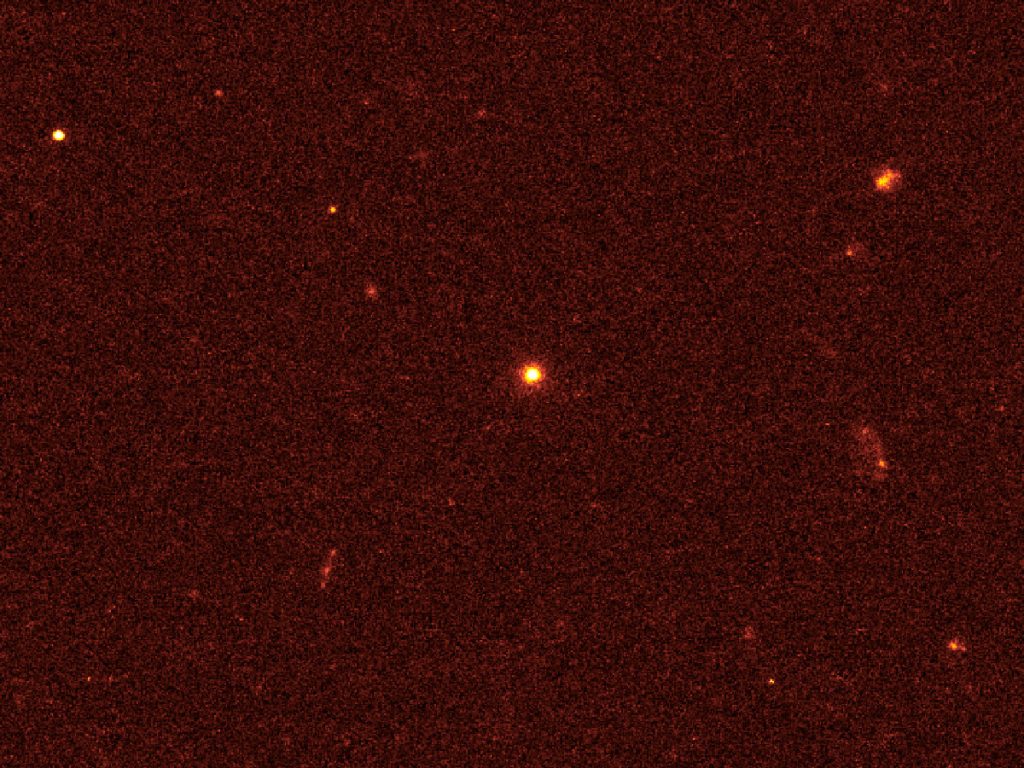
In 2018, a distant galaxy’s core lit up with a flare so intense it eclipsed every similar event on record. The supermassive black hole at the heart of active galactic nucleus J2245+3743 had begun tearing apart a colossal star at least 30 times the mass of the Sun, 10 billion light-years away. Over several months, the flare brightened by a factor of 40, achieving a luminosity of 10 trillion suns-equivalent to a tidal disruption event unlike any astronomers had ever witnessed.
1. The Mechanics of a Tidal Disruption Event
A tidal disruption event (TDE) occurs when a star ventures too close to a supermassive black hole and is torn apart by its immense gravitational forces. The star’s material is stretched into a stream of gas some is ejected, while the rest spirals inward, heating up and emitting vast amounts of radiation. In J2245+3743, the doomed star’s exceptional mass amplified the flare’s energy output to levels far beyond typical TDEs. “If you convert our entire Sun to energy, using Albert Einstein’s famous formula E = mc², that’s how much energy has been pouring out from this flare since we began observing it,” said K. E. Saavik Ford of the City University of New York.
2. Record-Breaking Brightness and Distance
At its peak, J2245+3743’s flare was 30 times brighter than any previously recorded black hole flare, outcompeting the 2023 record-holder, which has been nicknamed “Scary Barbie.” The star involved in that event was only 3–10 solar masses. Because light from the flare’s source traveled through space for 10 billion years to reach Earth, it appears to have emanated from the early universe. “The energetics show this object is very far away and very bright,” noted Matthew Graham of Caltech.
3. Viewing in Slow Motion
Due to cosmological time dilation, events at such distances appear to unfold more slowly. As Graham explained, “Seven years here is two years there. We are watching the event play back at quarter speed.” This effect enabled astronomers to track the flare’s evolution over years, providing a rare extended view of a massive star’s destruction.
4. Multi-Wavelength Astronomy in Action
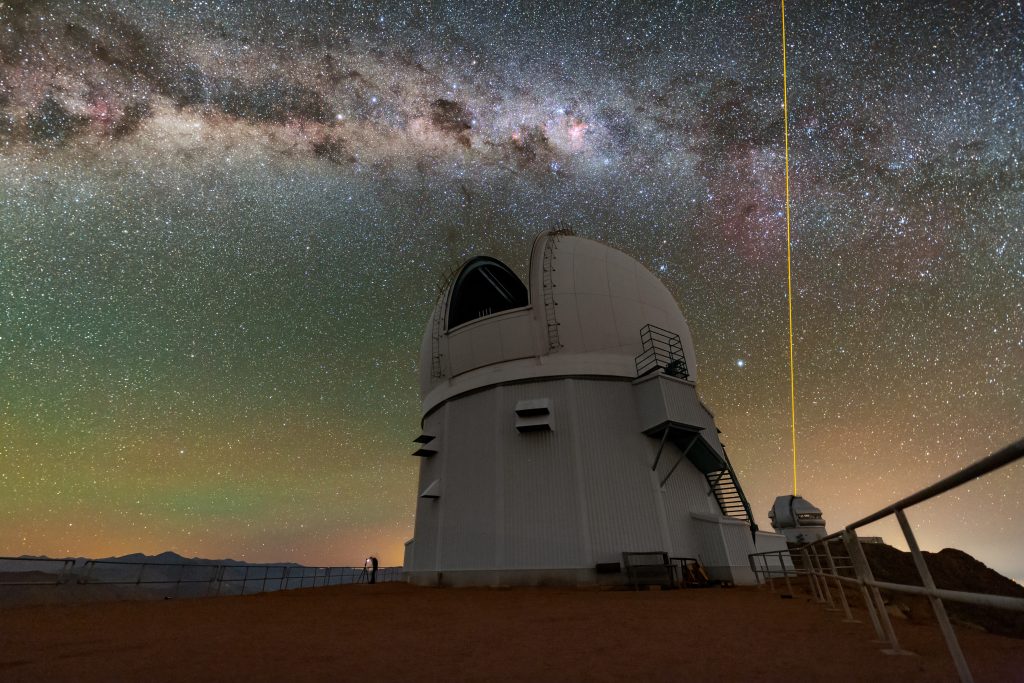
Discovered in coordinated observations by multiple facilities, the flare was first detected with the Zwicky Transient Facility at Palomar Observatory, while follow-up spectra from the W. M. Keck Observatory revealed its extreme luminosity. Data from NASA’s retired Wide-field Infrared Survey Explorer also ruled out beaming effects – where material is focused in a specific direction- confirming the brightness was indeed isotropic, radiating in all directions.
5. Distinguishing from AGN Variability
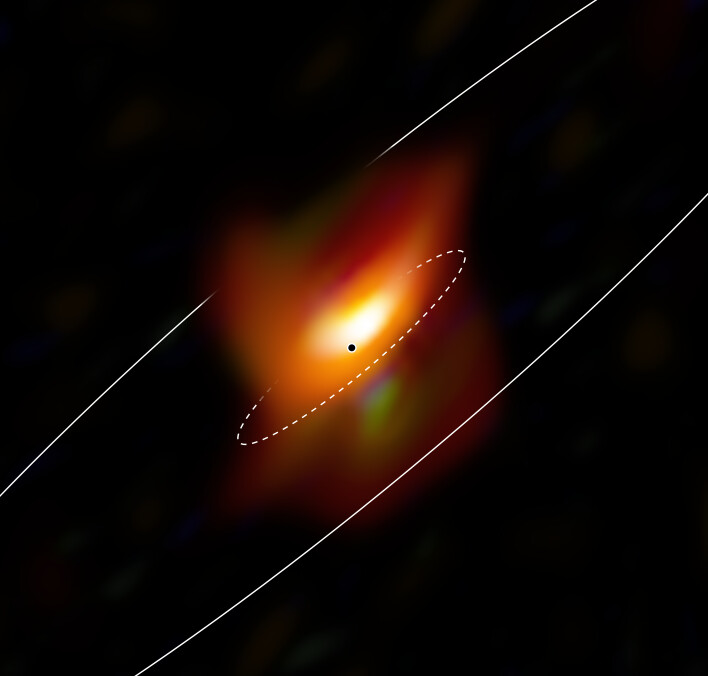
Thus, active galactic nuclei are intrinsically bright due to the accretion disks feeding their central black holes, and these backgrounds generally obscure TDEs. In J2245+3743, however, this flare was of sufficiently large amplitude compared to the normal emission of the AGN that it was easily distinguished and confidently identified.
6. Rarity of Massive Stars in AGN Disks
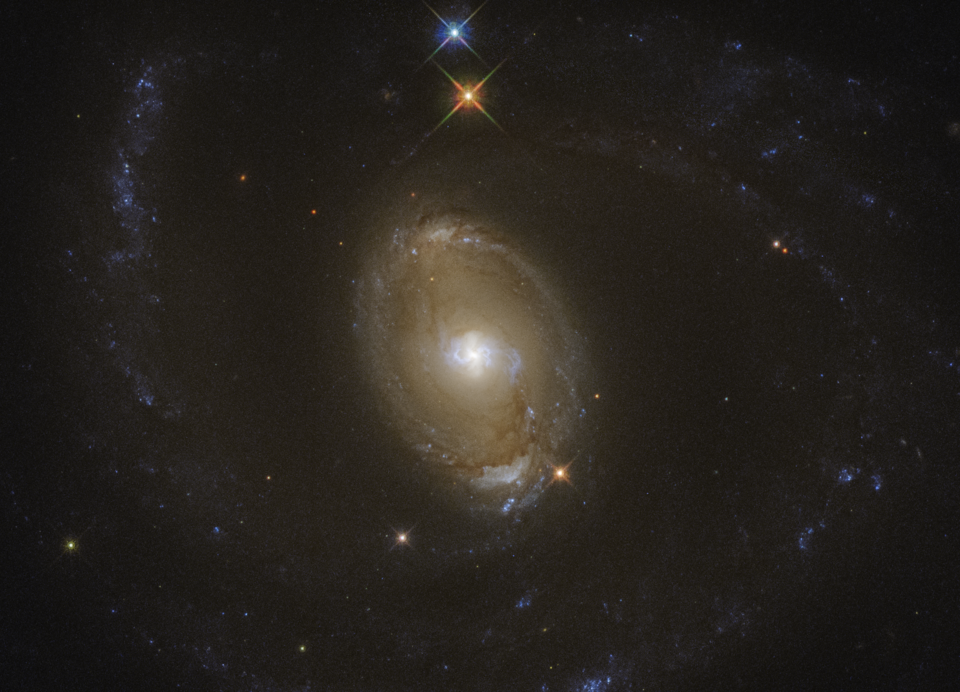
Stars above 30 solar masses are very rare in normal galactic environments. Ford says that in the disks of AGNs, dense streams can feed stars and make them grow to an unusually large size. When such stellar giants get disrupted, they can produce very intense flares, probably a new class of TDEs, which will be detectable even in bright AGN cores.
7. Implications for Black Hole Feeding Models
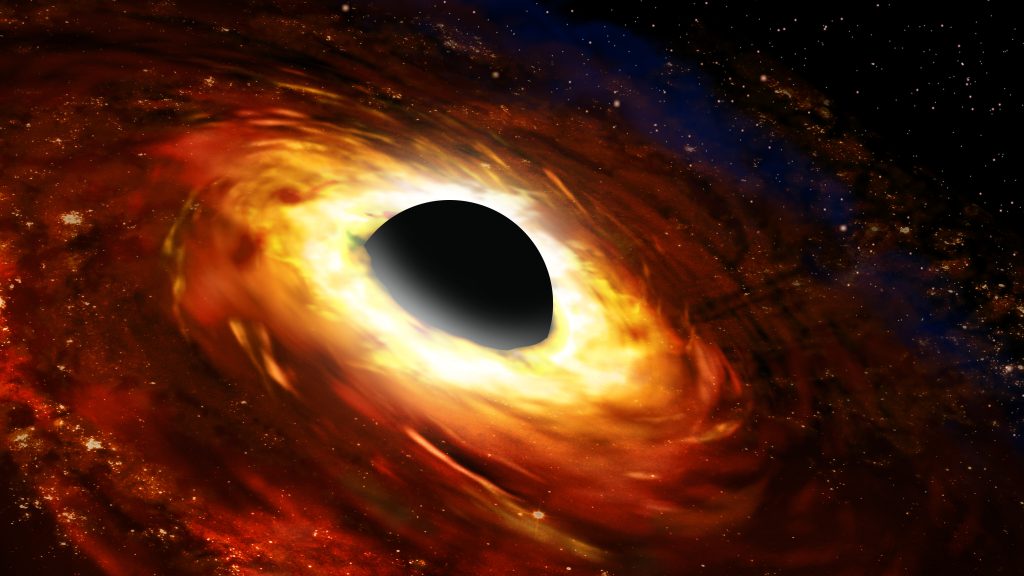
This event offers insight into how supermassive black holes interact with their surroundings. The prolonged flare suggests a gradual consumption process with stellar debris colliding with the AGN’s accretion disk, sustaining high luminosity. The absence of the X-ray jet suggests that the energy release is dominated by thermal emission from the heated gas, rather than relativistic outflows.\
8. In Search of More Cosmic Giants
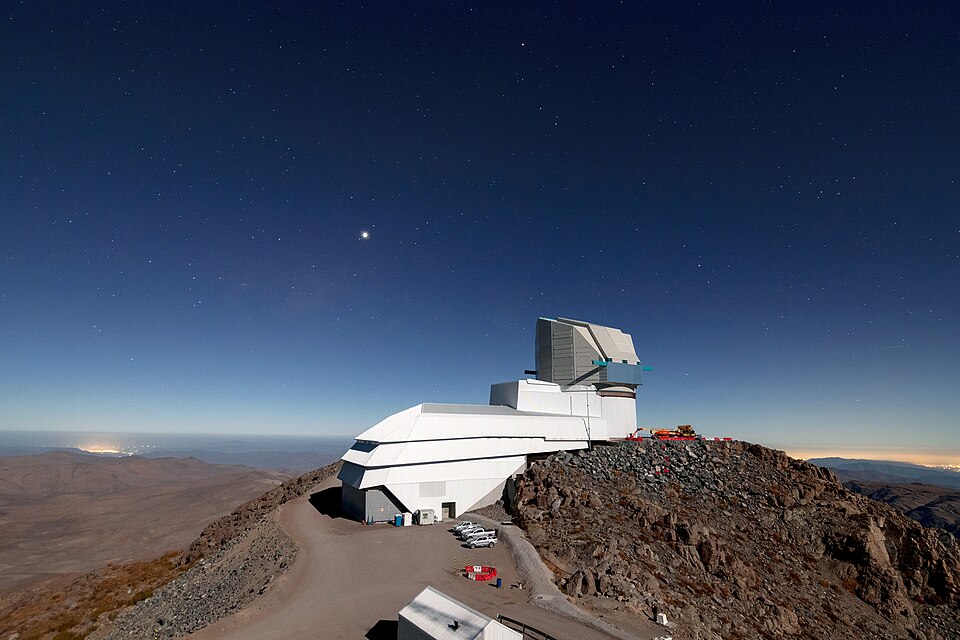
The team intends to mine archival ZTF data for similar events and looks forward to new discoveries with the Vera C. Rubin Observatory. The possible detection of more massive-star TDEs in AGNs may further constrain models of stellar growth within accretion disks and the rate of such extreme encounters throughout the universe.
The flare from J2245+3743 continues to fade and remains visible, its light curve a lingering testament to the violent end of a rare stellar giant. As Graham so colourfully put it, the star is “a fish only halfway down the whale’s gullet” – a cosmic meal still in progress, lighting up the depths of black hole physics and the dynamic nature of galactic cores.


