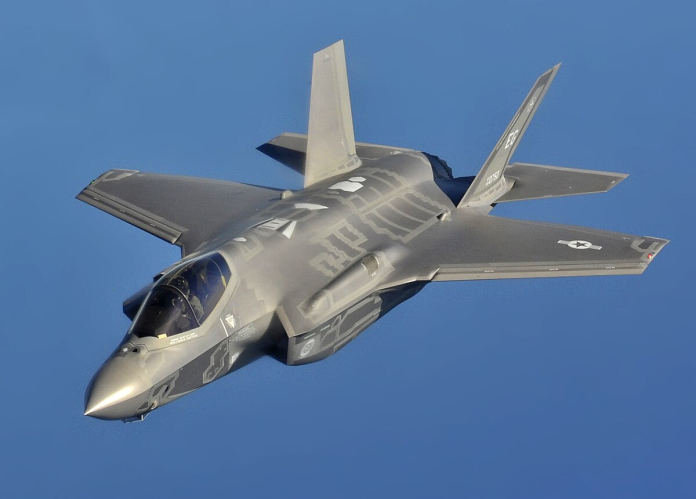
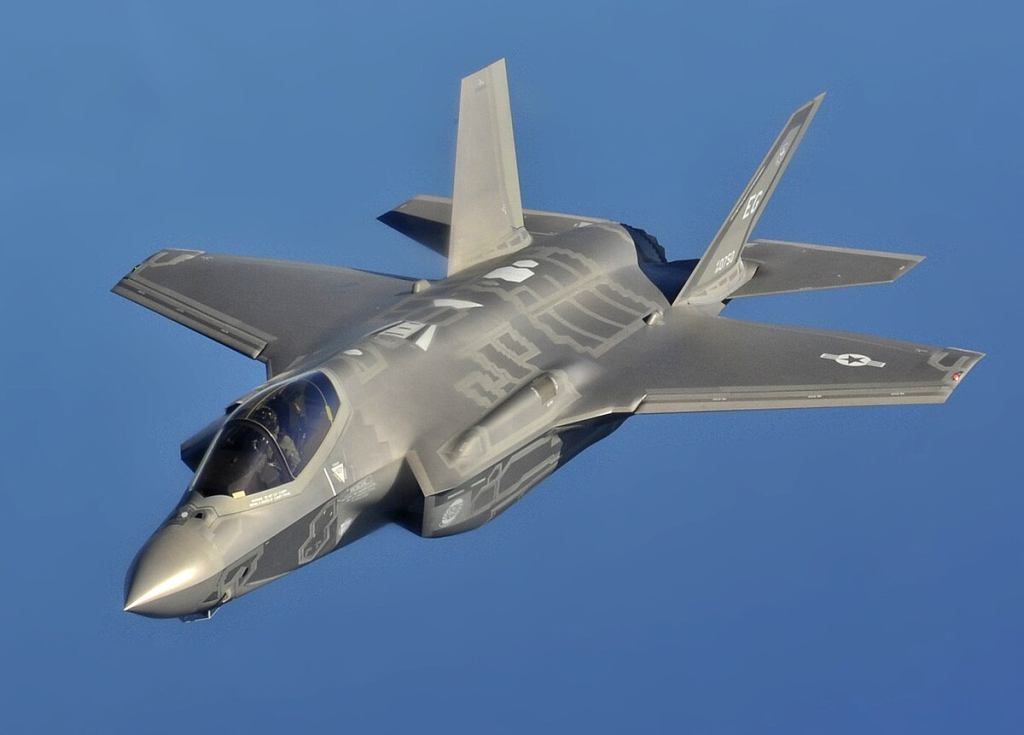
The era of building an entirely new fighter for every generational leap may be ending. Lockheed Martin is gambling that injecting sixth‑generation capability into existing fifth‑generation platforms can deliver near‑peer dominance at a fraction of the cost and time. What the company calls its “Ferrari F‑35” vision would achieve 80 percent of Next‑Generation Air Dominance, or NGAD, performance for roughly half the price of a clean‑sheet design.
But the pivot is not about saving money; it’s about compressing timelines, mitigating risk, and ensuring the U.S. Air Force’s most capable fighters remain lethal deep into the 2030s. It is how Lockheed fuses adaptive propulsion, advanced stealth, AI‑driven decision aids, and manned‑unmanned teaming into the F‑35 and F‑22 that bridges a gap until full NGAD systems arrive. Here are nine of the biggest upgrades and concepts shaping this transformation.
1. Sixth‑Generation Technology Insertion Strategy
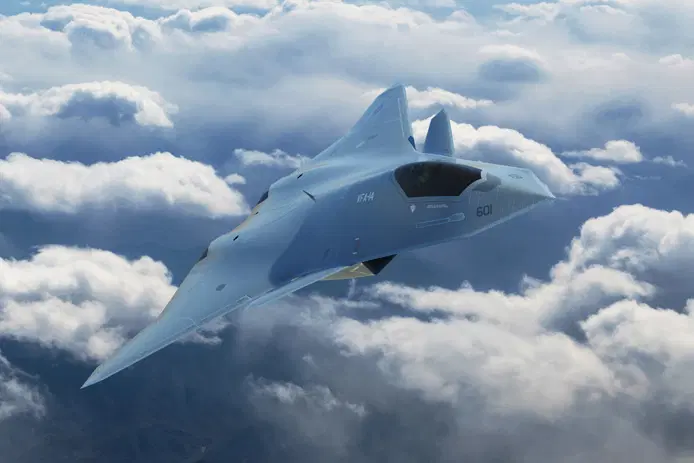
To date, the course Lockheed Martin has taken has included retrofitting F‑35s and F‑22s with technologies first developed for NGAD, such as stealth refinements, advanced coatings, inlet redesigns, and upgraded mission systems. By using tried-and-true platforms, the company can avoid the long lead times and cost overruns commonly associated with new aircraft programs while still fielding optimized capabilities for contested environments.
2. TR‑3 and Block 4 Computing Backbone
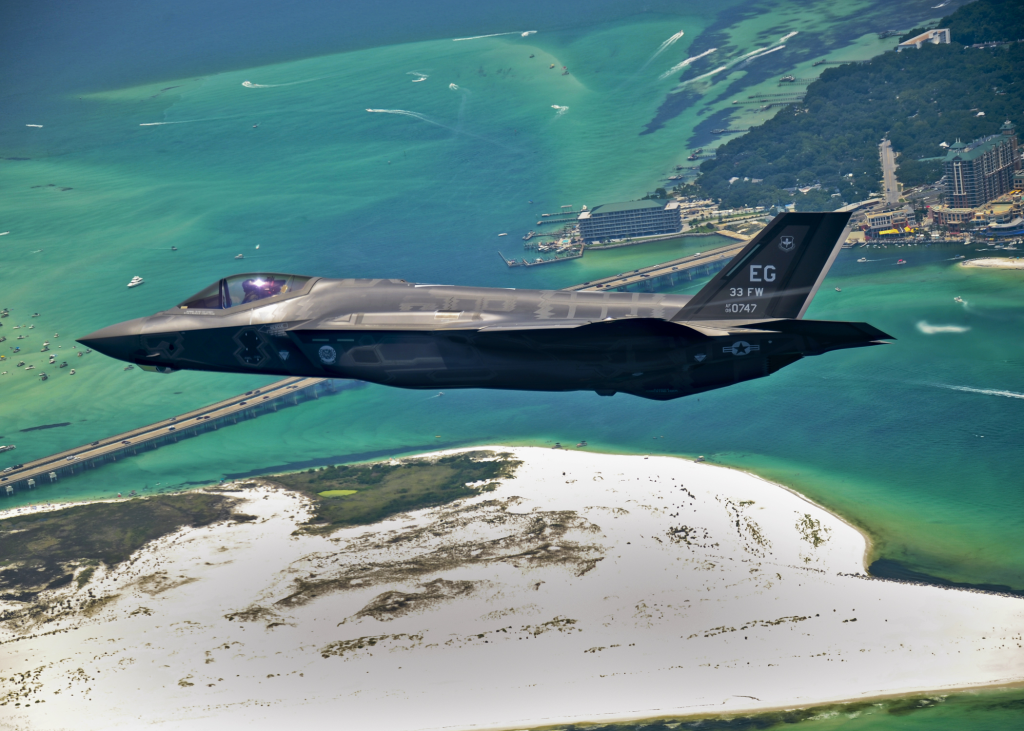
The critical upgrade, Technology Refresh 3, installs a new integrated core processor, expanded memory, and an enhanced panoramic cockpit display in the F‑35. These computing gains enable Block 4’s expanded electronic warfare suite, improved target recognition, and greater weapons integration. The open mission systems architecture ensures that new sensors and algorithms can be rapidly integrated.

3. Adaptive Cycle Propulsion for Range and Power
By comparison, the XA102 of General Electric and the XA103 of Pratt & Whitney promise up to 20 percent more thrust, 25 percent better fuel efficiency, and over 30 percent more range. Their third‑stream airflow can be modulated for either high‑thrust combat or fuel‑saving cruise, while generating megawatt‑class electrical power for directed‑energy weapons and advanced sensors. This propulsion leap is vital for Pacific operations where tanker vulnerability is an issue.

4. Improved Stealth and Signature Management
Newer upgrades to stealth will tap into the very latest in radar-absorbing material and shaping techniques. Already, planform alignment and jagged panel edges on the F‑22 yield an estimated radar cross-section as low as 0.0001 m². New coatings, inlet treatments, and infrared suppression measures will further lower detectability in multiple frequency bands, some adapted from NGAD research.

5. AI-driven sensor fusion and decision support
Avionics of the sixth generation will integrate inputs onboard and offboard, from satellites to drones, into one unified picture of the battlespace. AI algorithms will help in threat detection, target prioritization, and execution of autonomous mission tasks, hence reducing pilot workload and enabling faster, better decisions in highly dynamic engagements.
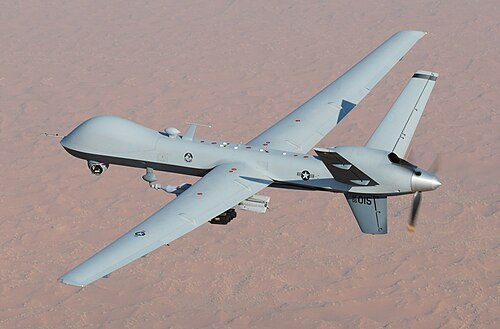
6. Manned‑Unmanned Teaming with Loyal Wingmen
The CCA model is manifest in the Lockheed Skunk Works Vectis concept. Group 5‑class drones might perform mission sets as decoys, sensors, or strike assets, extending the reach of F‑35s and F‑22s while absorbing risk. Operating as a “quarterback,” the manned fighter dispatches autonomous wingmen to probe defenses, drop ordnance, or jam adversary radars.

7. Expanding Dominance in Electronic Warfare
Block 4 upgrades focus on cognitive electronic warfare those that can learn and adapt in real time to new threats. In concert with low‑probability‑of‑intercept datalinks and distributed processing, these enhancements will be able to enable the F‑35 and F‑22 to blind or deceive integrated air defense systems without revealing their positions.

8. Integration into Joint All‑Domain Command and Control
Upgraded Raptors and Lightnings are in line to become key nodes in the US military JADC2 network: connected via high-bandwidth, secure communications with surface, subsurface, space, and cyber assets, they will be able to conduct integrated operations across domains against peer adversaries.

9. Rapid Prototyping and Self‑Funded Development
Emphasizing its ethos of rapid prototyping, and with self-funded R&D, Skunk Works is putting upgrades on a fast track: flying demonstrators ahead of formal contracts, it shapes requirements and compresses acquisition cycles. In today’s corporate-risk approach, the urgency brought on by the Chinese and Russian advances in air and missile forces is palpable. Infusing sixth-generation capability into the F-35 and F-22 forms a pragmatic blend of ambition and realism in Lockheed Martin’s plan. In particular, such a strategy leverages existing industrial capacity, proven airframes, and emerging technologies to bring combat power sooner and at lower cost than a clean-sheet fleet. If executed as envisioned, these upgrades could keep America’s fifth-generation fighters tactically dominant until NGAD and its autonomous partners fully take the stage.


