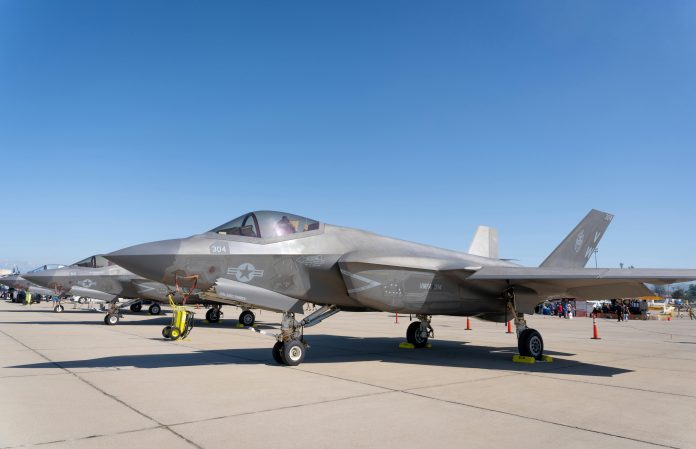
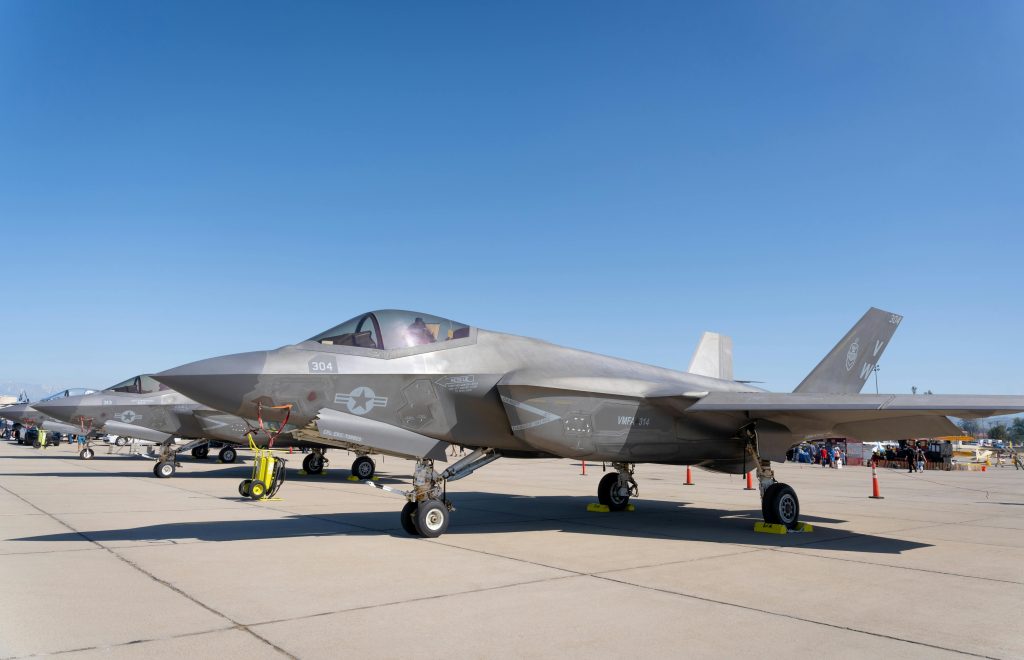
hat’s more expensive than a fifth-generation stealth fighter? Apparently, a sixth generation one — and the U.S. Air Force just penned the check. The F‑47 Next Generation Air Dominance (NGAD) program, newly contracted out to Boeing, is getting congratulations and criticism for its estimated per-unit price that could approach nearly trebling the F‑35’s cost. But for defense planners, the arithmetic is about a great deal more than sticker shock.

The F‑47 is sold as the world’s first manned sixth‑generation fighter, an aircraft that is not only meant to replace aging fleets but to outperform competitors in speed, range, stealth, and interoperability with autonomous systems. In the backdrop of China’s J‑20 and allegedly its J‑36 era, the program’s champions argue that it is an insurance policy against losing air supremacy. There are seven major parameters explaining why the F‑47 cost can be defended — and why its development is equally a question of industrial power as of air combat dominance.

1. Replacing a Waning Fifth‑Generation Edge
The Air Force’s current air superiority workhorse the F‑22 Raptor and F‑35 Lightning II is aging and strained. The older F‑22, which first took to the skies in 1997, had production reduced from 381 planned airframes to 187. The newer F‑35, which entered service in 2015, already faces survivability concerns, such as a close encounter from a Houthi surface-to-air missile during Operation Rough Rider.
These statistics require a successor that matches and exceeds their performance. The F‑47 design is meant to offer greater range, stealth, and versatility so the U.S. does not lag behind peer rivals technologically. As Gen. David Allvin had described, “While the F‑22 is now the best air superiority fighter in the world the F‑47 is a generation ahead.”

2. Counter China’s Growing Air Capability
China’s Chengdu J‑20 is already more rapid and possesses a larger combat range than the F‑35, and Beijing is now constructing the J‑36 a colossal, stealthy, triple-engine fighter tailored for Indo‑Pacific missions. Council on Geostrategy’s William Freer stated that the fact that the F‑47 announcement was made just months following public reports of the J‑36 is “not likely a coincidence.”

Due to be faster than Mach 2 and boasting a combat range of 1,000+ nautical miles, the F‑47 will negate the J‑20’s current advantages and pave the way for China’s future generation fleet. Its integration with autonomous wingmen will extend sensor reach and weapon delivery and give a networked force multiplier in contested environments.

3. A Platform Born for the Pacific Theater
Long‑range operations are required in enormous Indo‑Pacific, where bases are potentially hundreds of miles from contested airspace. The F‑47 combination of stealth and endurance is built to penetrate deep into anti‑access/area‑denial zones operating at more secure ranges.
Next Generation Adaptive Propulsion program adaptive-cycle engines will allow the aircraft to go from fuel-conscious cruise to combat-focused high-thrust mid-flight. The strategic reach and tactical agility dual capability is required for operations throughout the vast geography of the Pacific.

4. Integrating Collaborative Combat Aircraft
The F‑47 is the basis of a “family of systems” that includes over 1,000 planned Collaborative Combat Aircraft (CCA) autonomous unmanned aerial vehicles with reconnaissance, strike, electronic warfare, and decoy functions. Earlier CCA designs like the YQF‑42A and YQF‑44A, which Air Force plans have envisioned as the first CCA products, will boast a 700‑mile combat range, operating under the control of the F‑47.
This networking allows every manned fighter to extend its power many times beyond its own payload carriage capability, using drones as distant missile platforms, jammers, or forward sensors. President Trump emphasized, “This plane flies with drones as many as you want, and that’s something that no other plane can do.”

5. Stealth and Sensor Superiority
Official artwork describes the F‑47’s low-observability as “Stealth ++” beyond the F‑22’s “Stealth +.” This would likely entail broadband, all-aspect radar stealth and a reduced infrared signature. The next-generation sensors will be enabled by increased onboard electrical power generation and cooling capability in order to enable detection of targets at further ranges or with smaller radar cross-sections.
While early sketches show canards and dihedral wings features that would compromise stealth Air Force officials have indicated these are deliberate deceptions. The true design is secret, with inlets on engines and planform concealed to prevent sensitive information from falling into enemy hands.

6. Industrial Base and Strategic Signaling
Awarding the NGAD project to Boeing maintains all three major U.S. aerospace builders in business to produce fifth- or sixth-generation stealth aircraft. The Mitchell Institute for Aerospace Studies’ Doug Birkey called it “an important step in rounding that corner” to resuming high‑volume production capability.
The program is also a political statement. Defense Secretary Pete Hegseth expressed that the F‑47 “sends a very direct, clear message to our allies that we’re not going anywhere and to our enemies that we can project power around the globe, unimpeded, for generations to come.”
7. Accelerated Development Through Digital Engineering
The F‑47 leverages five years of surreptitious X‑plane flight testing by the Air Force and DARPA, adding hundreds of hours of flight to develop stealth, range, and autonomous capability. Employing government‑owned digital architecture, the program gains speed in integrating new technology and reduces delays that debilitated prior fighters.
Boeing’s $1.8 billion investment in a new 1.1-million-square-foot state-of-the-art combat aircraft production facility in St. Louis is part of this effort. President Trump suggested that most of the production facility already exists, which opens up the potential however ambitious of having the planes in service at the end of his current term.
The F‑47 NGAD program is not just one airplane, but a bet on the American future of air dominance, industrial capability, and strategic deterrence. Its cost is clearly high, but so is the price of falling behind the acceleration pace of the competition to sixth‑generation capability. Whether it achieves its potential will depend not just on success in engineering and production, but on the Air Force’s ability to integrate it into a comprehensive, responsive force structure that can stay ahead of a dynamic threat.


