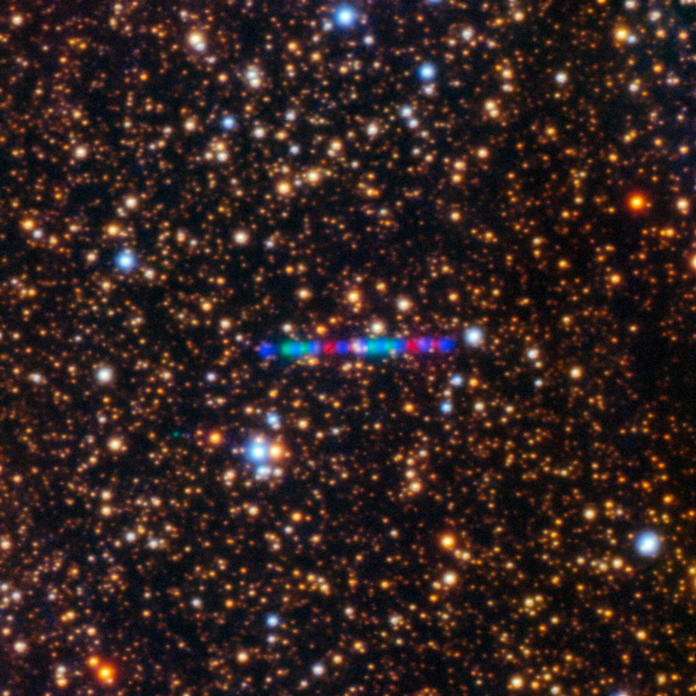
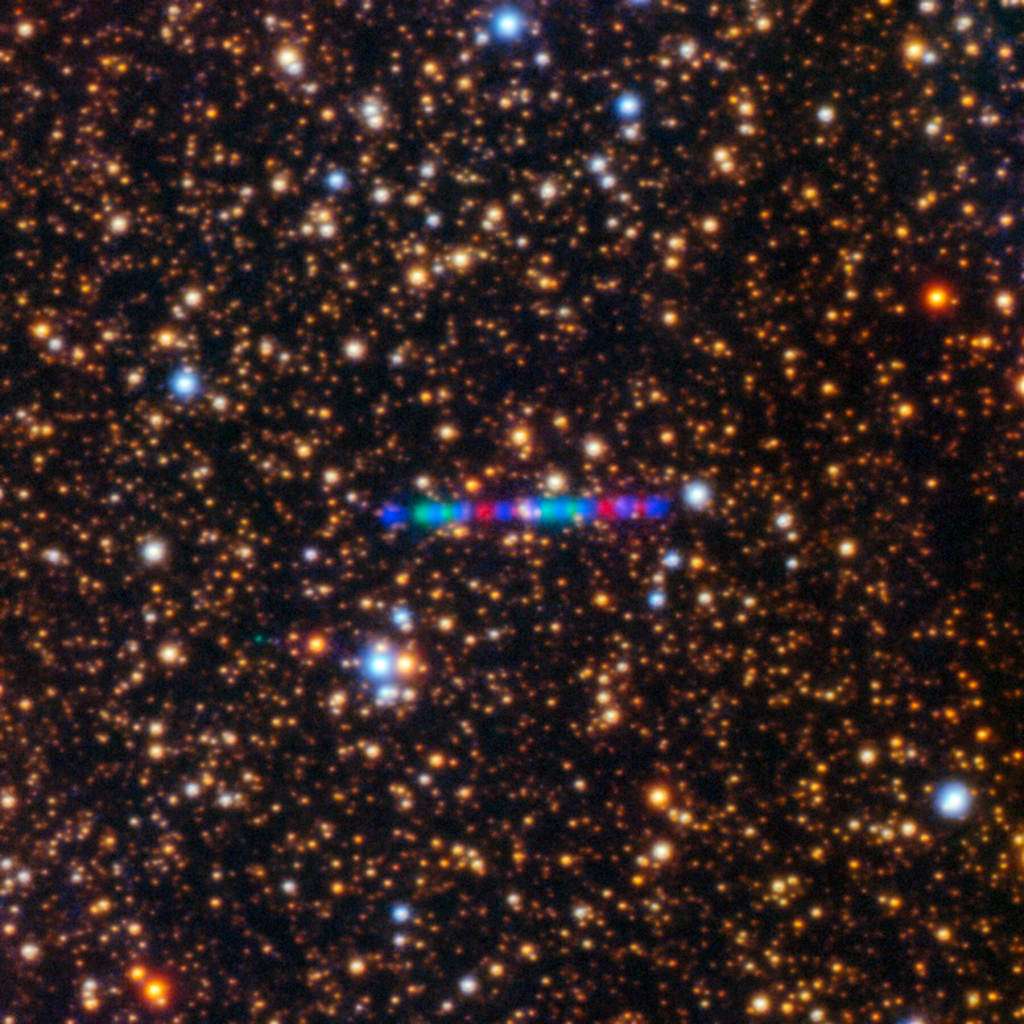
It’s not every decade that an object from another star system sweeps through the solar system, but 2025 brought just such a spectacle. Coming in at over 60 km/s, Comet 3I/ATLAS was only the third confirmed interstellar visitor-and possibly the most remarkable yet. Its size, strange chemistry, and the unprecedented worldwide campaign in its study make this a landmark in both astronomy and engineering.
From the Hubble Space Telescope to ESA’s Jupiter Icy Moons Explorer, from citizen scientists through to the James Webb Space Telescope-a fleet of instruments has turned toward the cosmic traveler. Data they have gathered not only illuminate the comet’s origins but also push the boundaries of how fast-moving and unpredictable targets can be tracked and analyzed. Here are nine of the most compelling revelations from this unparalleled campaign.
1. Largest Interstellar Object Yet
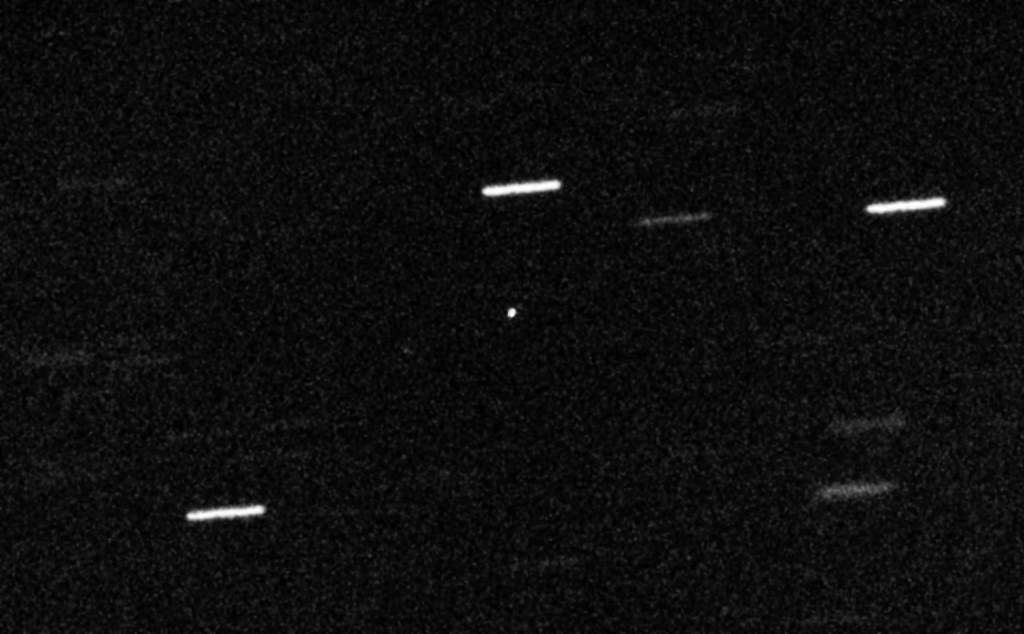
Early Hubble imaging in July 2025 constrained 3I/ATLAS’s nucleus to lie between 440 metres and 5.6 kilometres in diameter, hence likely to be the largest interstellar object detected to date. Its tens of billions of tons in mass far exceed that of 1I/’Oumuamua and 2I/Borisov. Such size allows one to study the preserved volatiles and dust from beyond the solar system in quantities far outreaching previous samples.
2. An Escape Velocity from the Sun’s Grasp
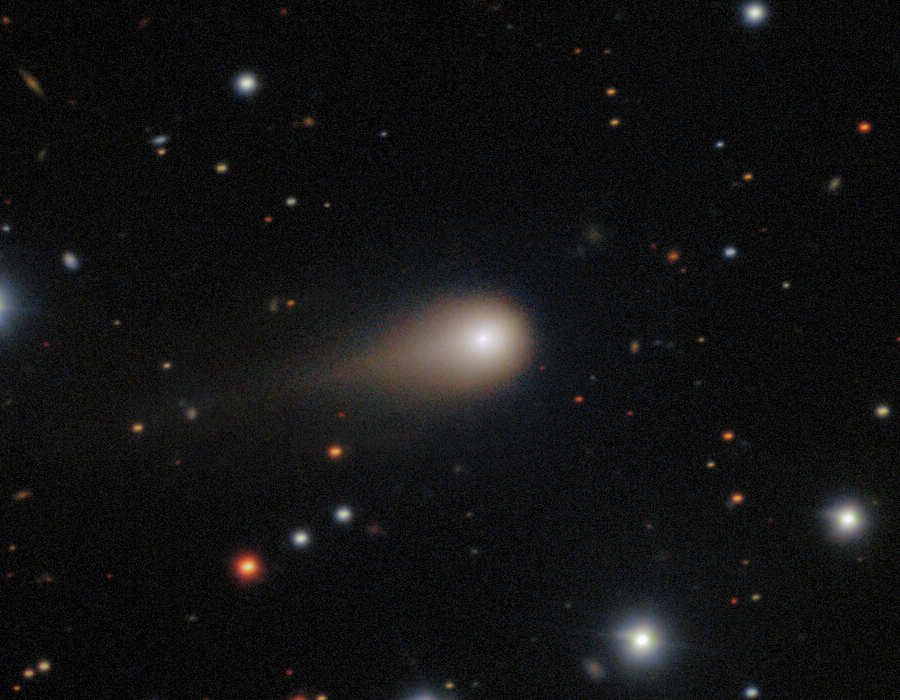
Inbound velocities measured above 60 km/s relative to the Sun confirm that 3I/ATLAS is on a hyperbolic trajectory. A velocity this large means that the comet is gravitationally unbound and will never return. Its retrograde track lies within 5° of the ecliptic, and its arrival direction is curiously close to the source of the 1977 Wow! Signal, although alignment is statistically improbable to imply any real link.
3. Dual Tails and a Bright Coma
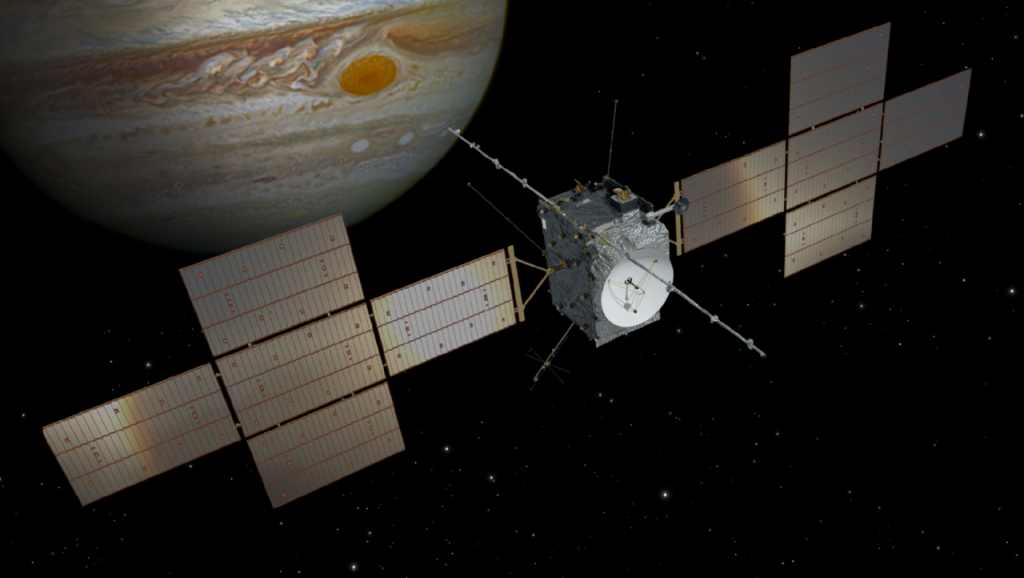
Indeed, ESA’s Juice spacecraft, only 41 million miles away, could capture a glowing coma and two distinguishable tails: a plasma tail composed of ionized gas and a much more subtle dust tail. Such features developed after perihelion due to the strong solar heating. Dust tail properties are indicative of grain sizes unlike those of typical solar system comets, a clue to its formative environment.
4. JWST’s CO₂-Dominated Coma Discovery
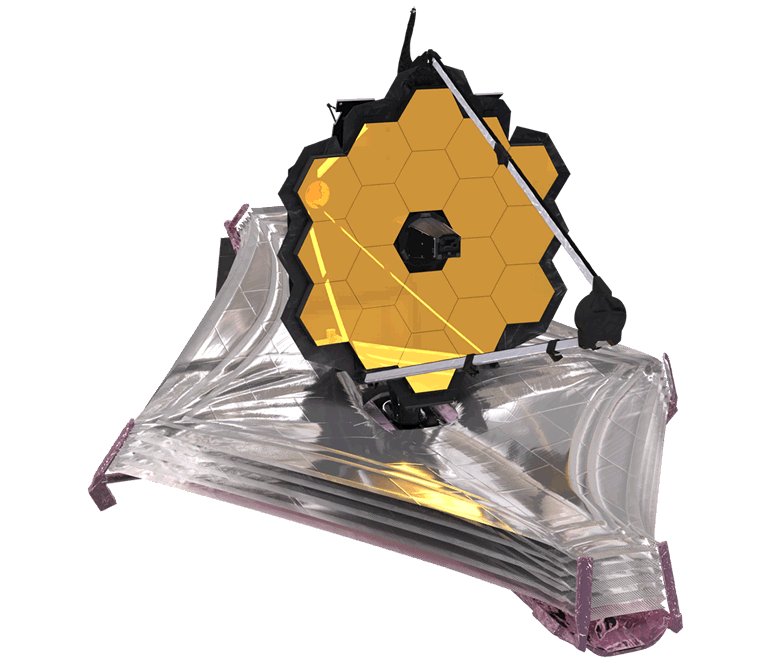
The IR spectroscopy of JWST gave a CO₂/H₂O comatic abundance ratio of ≈8.0±1.0, one of the highest measured ever for any comet, and it also implied that the comet formed within a cold and volatile-rich region beyond its parent system’s snowline. Detection of nickel abundances larger than iron also distinguishes comet 3I/ATLAS from local comets and points out peculiar chemical conditions at its origin.

5. Exotic Polarization and Color Shift
Optical studies revealed extreme negative polarization -2.7% at 7° phase angle, never seen by any known comets. After perihelion, the color of the comet turned toward blue-a change perhaps related either to surface modification or some dust composition change linked with close proximity to the Sun. These optical anomalies add to the ever-growing list of ways 3I/ ATLAS defies conventional cometary behavior.
6. Thin-Disk Origin Probability
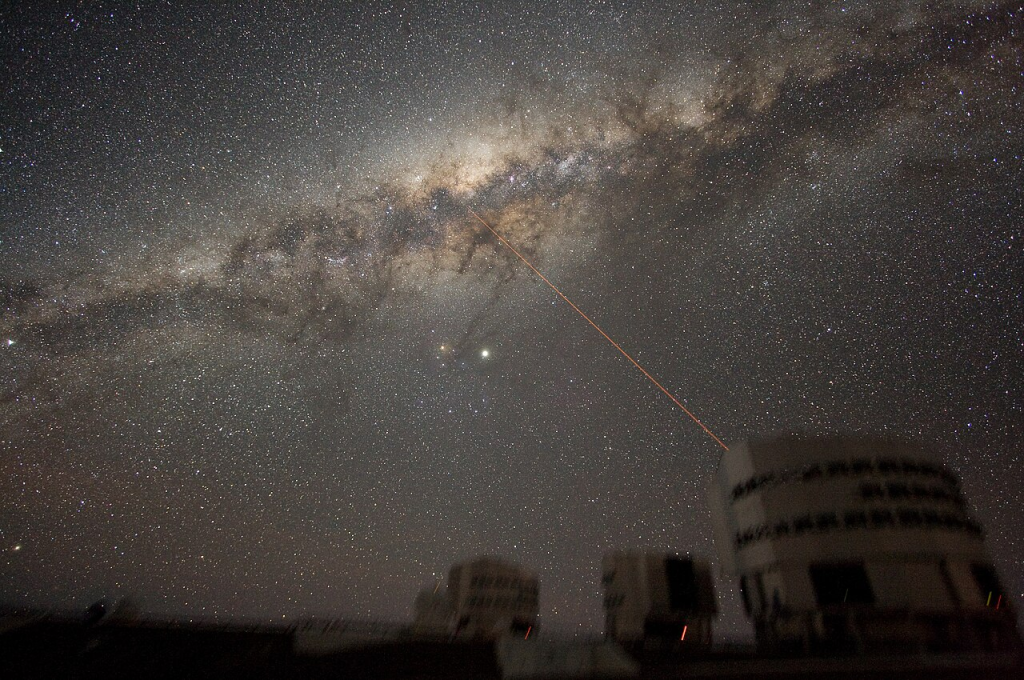
Orbital simulations using the stellar data from Gaia DR3 have traced 25 past stellar encounters, none of which plausibly ejected the comet under known mechanisms. Statistical modeling constrains the probability that 3I/ATLAS comes from the Milky Way’s thin disk at 96.6%, with an age likely in excess of 5 billion years. High velocity implies ejection from the parent system with substantial kinetic energy and not acceleration afterwards.
7. Engineering Wonders in Tracking
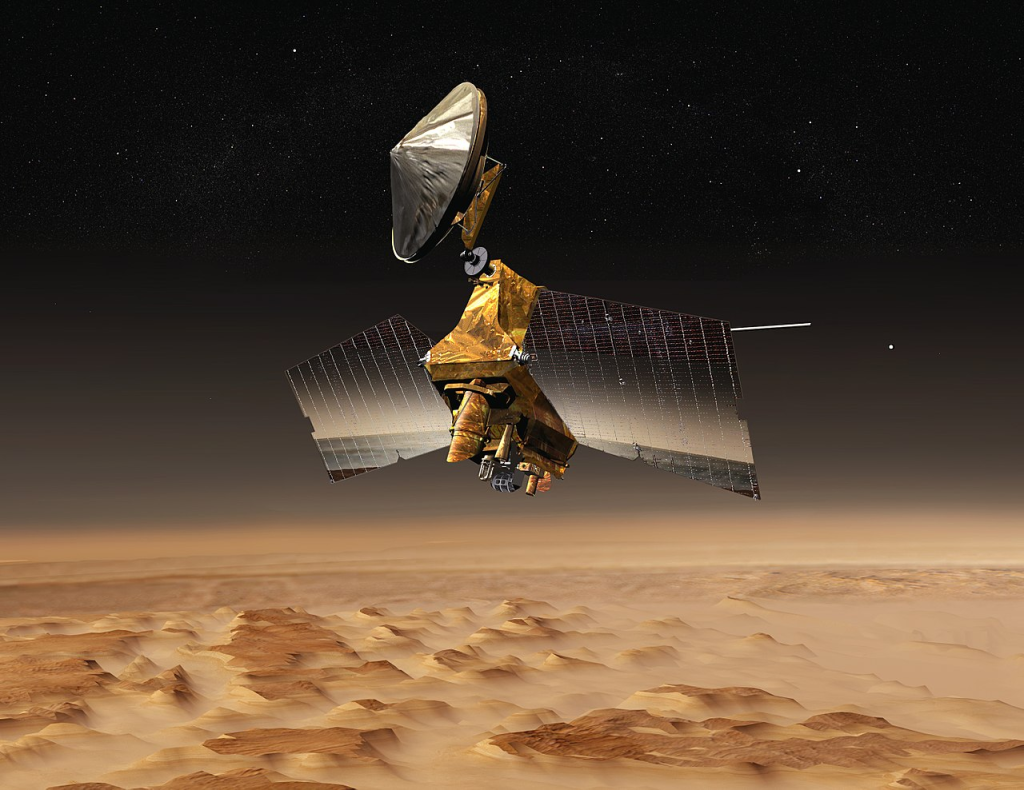
Innovations had to be made in multi-platform coordination-from Mars orbiters to solar observatories, many of which had been repurposed from unrelated missions-to deal with such observations of a fast-moving and hence very faint target. Low signal-to-noise challenges in crowded star fields were overcome by precision ephemerides, adaptive optics, and synchronized optical-infrared spectroscopy, demonstrating readiness for future rapid response campaigns.

8. Neural-Rendezvous and Future Interceptions
Innovations such as Hiroyasu Tsukamoto’s Neural-Rendezvous-a deep learning guidance system-show how autonomous spacecraft might one day intercept ISOs. Tested on multi-spacecraft simulators and drone swarms, the system optimally positions craft to maximize data return despite high-speed, uncertain trajectories. With such technology, sample-return missions may be possible, turning rare flybys into laboratory science.
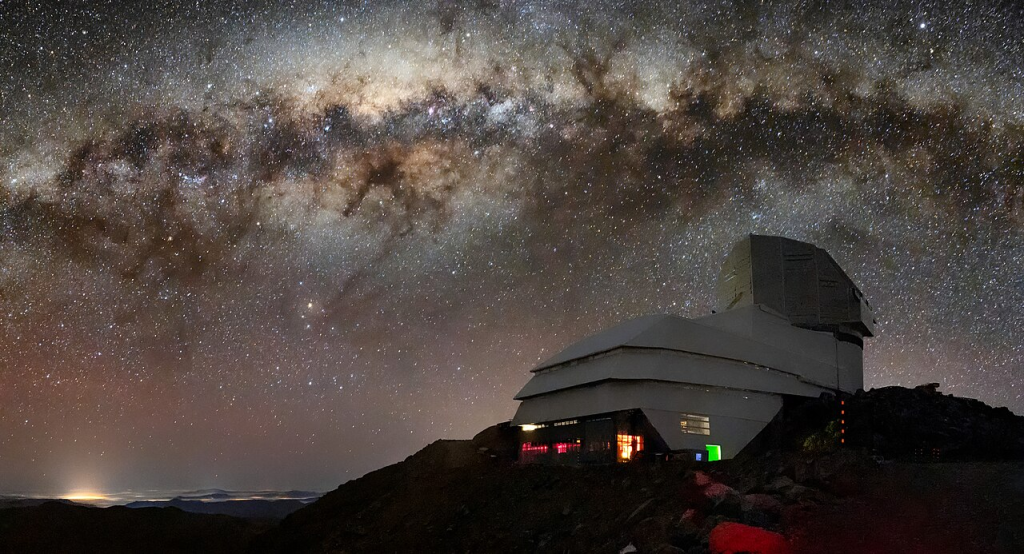
9. Rubin Observatory’s ISO Hunting Potential
The Vera C. Rubin Observatory’s Legacy Survey of Space and Time will image the whole visible sky every three nights with the prospect of finding 5-50 ISOs in a decade. Combining depth, breadth, and cadence in a single survey, it uniquely positions itself as an ‘ISO hunter’ that will transform these once-in-a-decade events into a steady stream of discoveries for statistical and compositional studies.
The campaign to study 3I/ATLAS indeed yielded an extraordinary mix of scientific insight and engineering achievement-from revealing a CO₂-rich chemistry unlike the great majority of solar system comets to refining methods for tracking and, if needed, intercepting interstellar visitors. As detection capabilities expand with facilities like Rubin Observatory, the next interstellar object may arrive not as a surprise but as part of a planned, coordinated exploration-and lessons from 3I/ATLAS will be the blue print.


