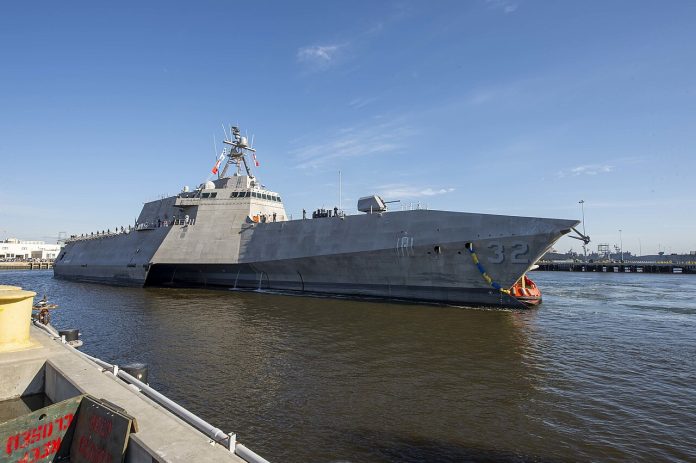
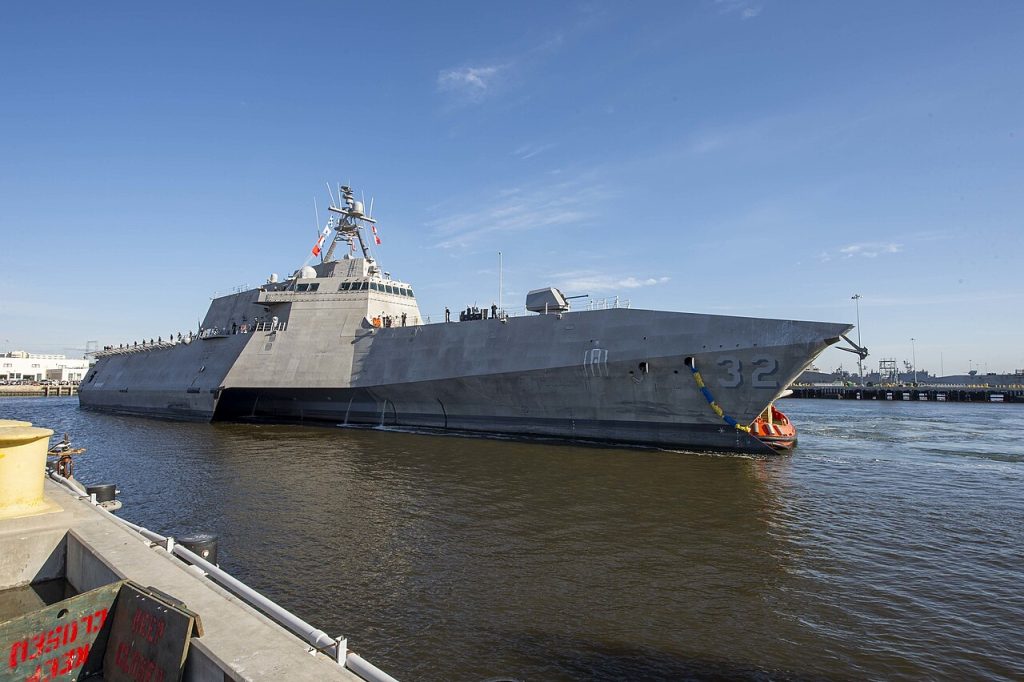
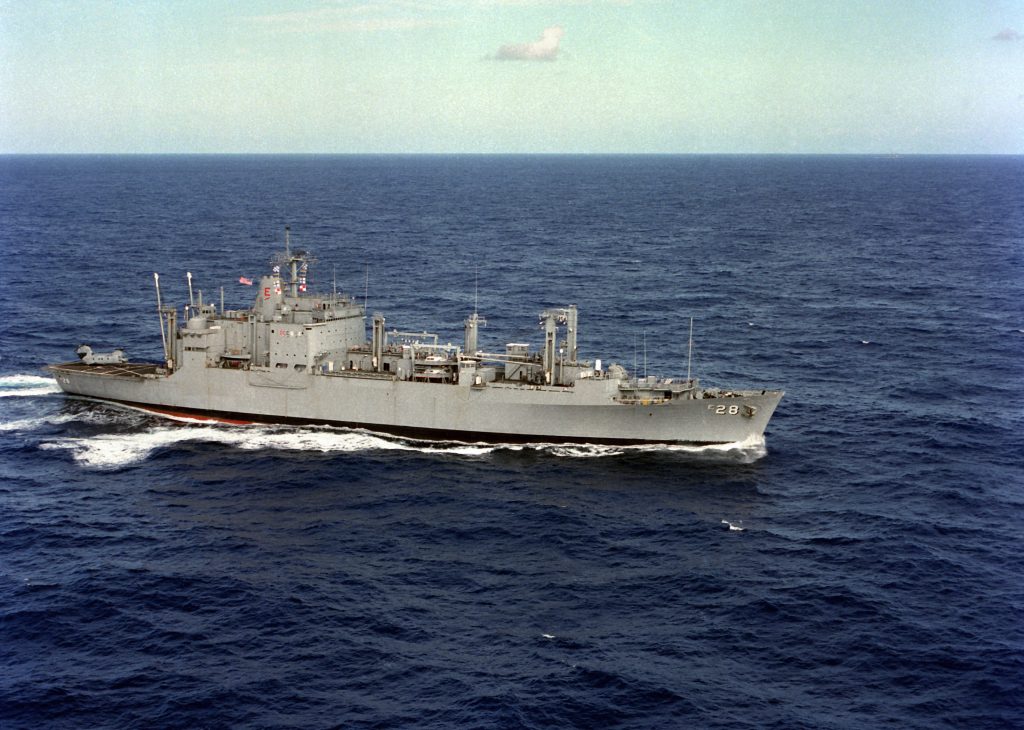
“This capability will prove to be a strong force multipliers for the maritime security of the region,” stated Vice Adm. Curt Renshaw regarding the milestone the United States Navy reached, as the Independence-class littoral combat ship USS Santa Barbara conducted the first launching of the Low-Cost Unmanned Combat Attack System (LUCAS) on a one-way attack drone from the flight deck of the USS Santa Barbara in the Arabian Gulf on December 16.
This is not only a technological milestone, rather it also points to a greater transition towards needing to build on the use of expendable, precision-strike unmanned platforms. As the threats are mounting in contested seas, the Navy’s decision to develop low-cost drones in substantial numbers has been an urgent need in order to multiply their options without necessarily needing to transform their existing fleets.
The following nine developments are indicative of why this launch is significant, and what it implies in regard to maritime strategies and the role of future unmanned combat forces within that broader construct.
1. First Ever Ship-Launched LUCAS
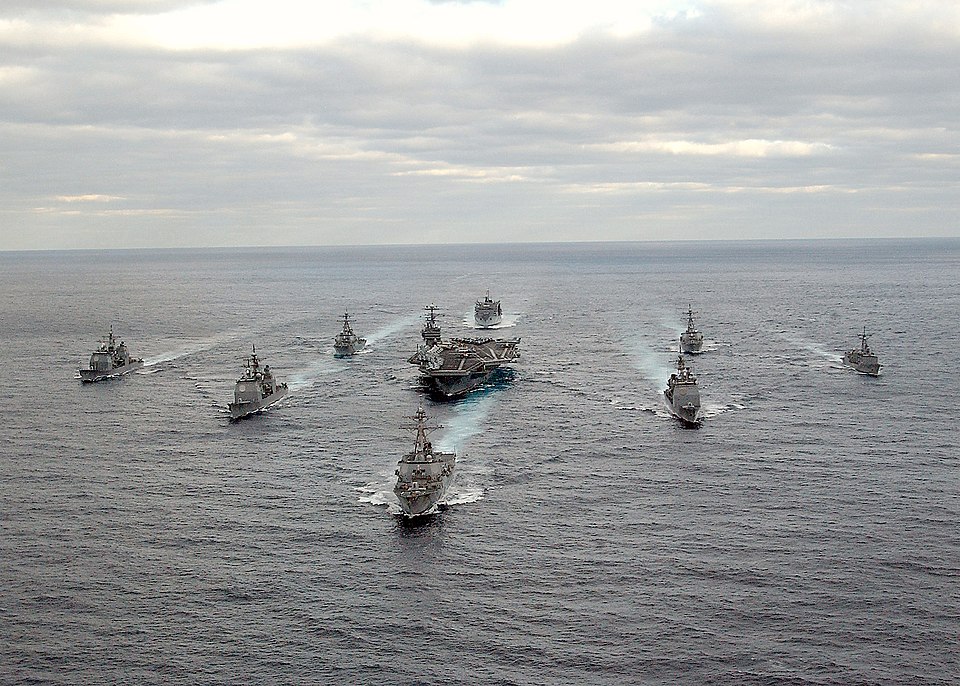
The success of the maiden deployment of LUCAS by the USS Santa Barbara now records another historic moment, which is the first operational employment of a one-way attack drone aboard a U.S. Navy ship. The exercise was carried out by Task Force 59, under the U.S. Naval Forces Central Command, proving that unmanned attack assets could be incorporated aboard current designs without requiring significant changes. It enables vessels to deploy long-range strike assets side by side with conventional weaponry such as guns, missiles, and others.
2. Reverse-Engineered from Iranian Shahed-136
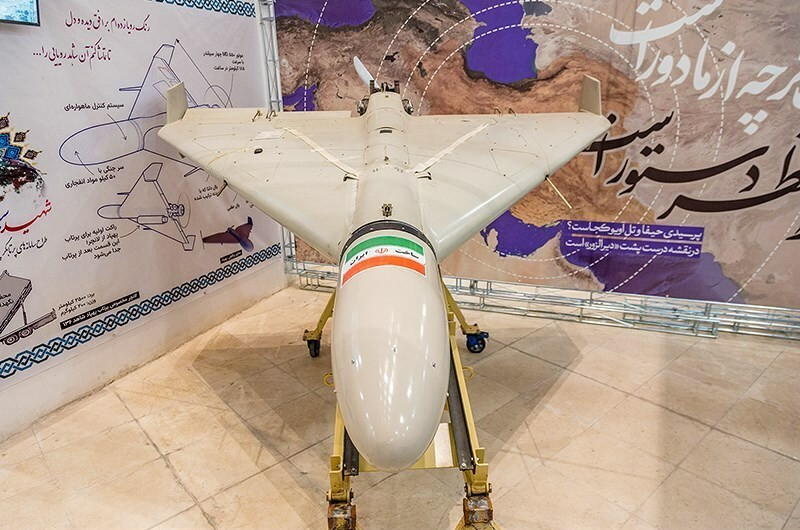
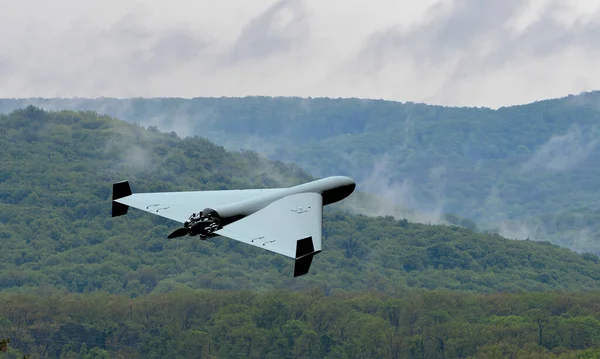
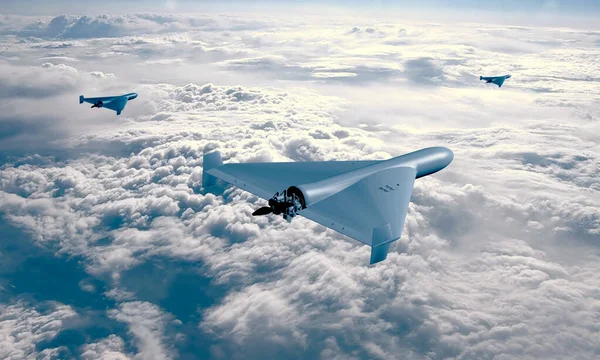
Designed by SpektreWorks, LUCAS is a direct reverse-engineered version of Iran’s Shahed-136, which Russian forces have been utilizing en masse in Ukraine. Slightly smaller than the Iranian variant, LUCAS features the delta-wing design and loitering attack capabilities, which would allow the UCIAV to remain in the air before striking targets through a dive attack maneuver. This would give the US military a low-cost, mass-manufactured weapon capable of meeting a variety of mission sets.
3. Flexible Launch Options Across Domains
LUCAS drones can be launched from catapult-launching systems, rocket-assisted take-off, land mobile launchers, and ship catapults. Indeed, the versatility in design and functionality allows the drones to be launched from semifixed stations, as well as from all types of ships with sufficient deck space. This makes it easier to reposition the drones, especially in regions with continuously changing threat environments.
4. Integration with Task Force Scorpion Strike
The event is a part of the Task Force Scorpion Strike and the CENTCOM very first one-way attack unmanned aerial vehicle squadron. This particular group’s area of operation concentrates on providing the Middle Eastern theatre with an effective and affordable unmanned system. They use innovation as a deterrence. It indicates the operational presence that the squadron has regarding strategic hot zones such as the Strait of Hormuz.
5. Modular Design for Multi-Role Capability
In images of LUCAS, one can observe the modular arrangement, ranging from gimbaled camera configurations through to beyond-line-of-sight satellite datalinks. This allows for dynamic targeting, engagement of moving targets, and also coordination for swarms. With the advent of simpler strike UAVs and fewer advanced networking entities, one can form collaborative strike swarms that can be more resilient and efficient than before.
6. Strategic Impact in the Arabian Gulf
LUCAS, being located in the Arabian Gulf, puts them in proximity to the highly strategic sea lanes around Iran. U.S. government officials have observed, “We can flip the script on our adversaries by using these kinds of platforms in the Middle East.“ Because of their low cost of about $35,000 per drone, swarms of LUCAS can potentially be deployed against their enemies.
7. Extending Littoral Combat Ship Roles
TheIndependence LCSs have been panned for their inability to fulfill their intended task. Equipping these with containerized missile launchers and now kamikaze drones gives the LCSs a hope to regain importance. A barrage of LUCAS drones will prove to be a game-changer in giving the LCSs a new task in distributed maritime operations.
8. Lessons from Global Drone Warfare
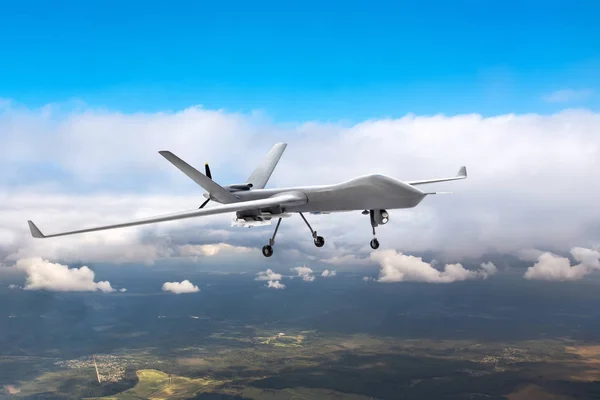
Iran has used Shahed 136 derivatives against vessels and infrastructure. The Russians are using these drones en masse against Ukraine. Such missions show the drones’ capacity for unexpected attack trajectories. Therefore, with these drones, the U.S. now has an effective weapon used successfully for recent conflicts but has improved networking and targeting systems.
9. Pathway to Broader Unmanned Integration
“The maritime drone revolution is progressing towards multi-domain operations,” says Jerome Lalieu, vice president for unmanned systems at Nav Johnson France. “LUCAS’ shipboard launch is bringing us closer to this reality as it provides scalable strike capabilities in addition to other unmanned assets.” In the future, such technologies can be key todeterrence campaigns as they minimize risks to personnel.
“The launch of USS Santa Barbara’s LUCAS is much more than just a first in its technical abilities; it’s a message in itself,” continues Williams, adding, “Low cost, rapid reaction, and modular operations enable us to create unmanned systems as an integral part of our power projection strategy, especially at a time when our adversaries are using low-cost, expendable unmanned systems to threaten and undermine our conventionally armed fleets, and our only option is to match them in their own game in order to remain in front.”


